
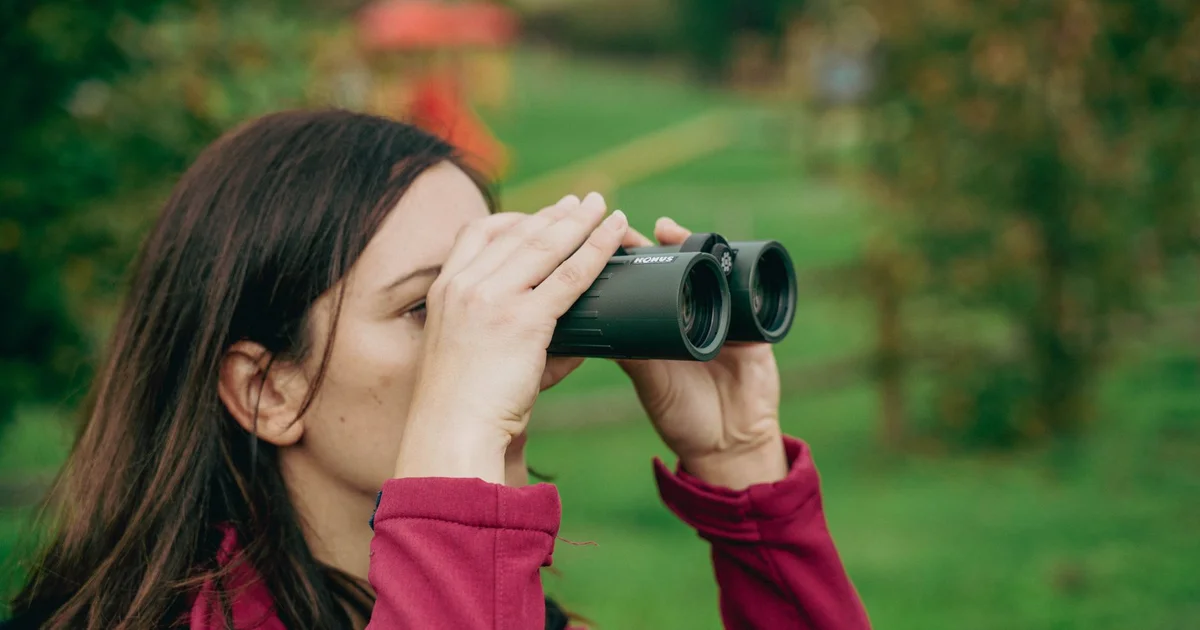

A good pair of binoculars opens a world the naked eye does not see, from a bird on a branch to craters on the Moon. So we singled out the 7 best binoculars 2026, from models for birdwatching and astronomy to compact travel and waterproof ones for the sea. For each we list the magnification, objective diameter, what it is best for and a rough price, so you can pick the right one for your purpose.
With binoculars two numbers say the most: the first is the magnification, and the second the objective diameter in millimeters, which determines the brightness of the image. It is important to know that more magnification is not always better, because above 10x the image is harder to hold steady and the field of view is narrower. This guide is for everyone who loves nature, travel and the sky, with honest advice on choosing.
Quick overview
These seven binoculars cover every purpose, from birdwatching to astronomy and the sea. Below is a quick overview before the details.
| # | Product | Optics | For what | Price | Best for |
|---|---|---|---|---|---|
| 1 | Celestron Nature DX 8x42 | 8x42 | Birds | ~130 EUR | Best overall |
| 2 | Olympus 10x25 WP II | 10x25 | Travel | ~60 EUR | Compactness |
| 3 | Celestron SkyMaster 15x70 | 15x70 | Astronomy | ~80 EUR | Distance |
| 4 | Bresser Nautic 7x50 | 7x50 | Sea | ~110 EUR | Boat |
| 5 | National Geographic 10x50 | 10x50 | Beginners | ~40 EUR | Budget |
| 6 | Nikon Monarch M7 8x42 | 8x42 | Top image | ~300 EUR | Premium |
| 7 | National Geographic 6x21 | 6x21 | Children | ~20 EUR | The youngest |
1. Celestron Nature DX 8x42

Photo: Celestron
For birdwatching and nature, the Celestron Nature DX 8x42 is the best and most versatile choice. The 8x magnification and 42 mm objective give a bright and sharp image with a wide field of view, so you easily find and follow birds. For most people that is the right balance of closeness and steadiness of the handheld image.
Quality BaK-4 roof prisms and good lens coatings give a clear image with true colors, and the wide field of view makes it easier to follow birds in motion or in the branches. It is waterproof and nitrogen-filled against fogging, so it withstands rain, fog and dew in the field.
It is somewhat larger than compact travel models, and for astronomy you need more magnification. But for birdwatching, nature walks and general use, the Celestron Nature DX 8x42 is the first choice. It comes in handy with camping gear too.
| Specification | Detail |
|---|---|
| Optics | 8x magnification and a 42 mm objective |
| Prisms | Quality BaK-4 roof prisms |
| Field of view | A wide field for easily following birds |
| Durability | Waterproof and nitrogen-filled against fogging |
Pros: a bright and sharp image, a wide field of view for following, waterproof and durable.
Cons: somewhat larger than compact ones, for astronomy you need more magnification.
Our opinion: We recommend the Celestron Nature DX 8x42 as the first choice for most people. The 8x42 balance gives a bright, steady image for birds and nature without shake. For travel take a more compact model, but for home and outings this is the right one.
2. Olympus 10x25 WP II

Photo: Olympus
For travel and the pocket, the Olympus 10x25 WP II is a folding compact binocular that goes everywhere with you. With 10x magnification in a tiny housing, it fits in a jacket pocket or backpack, and it is ready for hiking, concerts and city sightseeing. When binoculars are always at hand, you see more.
Despite the small format, it is waterproof and durable, so you do not fear rain or dust on the road. The 10x magnification brings landscapes, animals in the distance or the stage close enough, and the low weight means you carry it without thinking.
The smaller 25 mm objective collects less light, so the image is darker at dusk, and the field of view is narrower than full-size models. But for travel and situations where every gram counts, the Olympus 10x25 WP II is an excellent companion.
| Specification | Detail |
|---|---|
| Format | Compact and folding for the pocket |
| Optics | 10x magnification and a 25 mm objective |
| Durability | Waterproof for outdoor use |
| Use | Travel, hiking and concerts |
Pros: very small and light, waterproof and durable, always at hand for travel.
Cons: the smaller objective gives a darker image at dusk, a narrower field of view than full-size models.
Our opinion: We pick the Olympus 10x25 WP II for travel and everywhere weight counts. When it fits in a pocket, you bring it even when you leave a larger binocular at home. For low light take a larger objective, but for daytime and travel this is just right.
3. Celestron SkyMaster 15x70

Photo: Celestron
For astronomy and long distances, the Celestron SkyMaster 15x70 provides power that ordinary binoculars lack. Strong 15x magnification and a large 70 mm objective collect a lot of light, so you see the Moon, star clusters and distant landscapes bright and with detail. For first steps into astronomy, that is an affordable entry without a telescope.
The large objective is the main advantage, because in the dark it collects light that smaller binoculars miss. Along with the Moon and planets, it is excellent for observing a distant coast, mountains or wildlife at a great distance.
Due to the strong magnification and weight it is almost impossible to hold steady by hand, so a tripod is recommended, and a thread for it is built in. The field of view is narrower and it is sensitive to shake. But for astronomy and distance with a tripod, the Celestron SkyMaster 15x70 is the right choice.
| Specification | Detail |
|---|---|
| Optics | Strong 15x magnification and a 70 mm objective |
| Brightness | The large objective collects a lot of light |
| Use | The Moon, stars and long distances |
| Tripod | A tripod thread, recommended due to magnification |
Pros: strong magnification for distance, a large objective and a bright image, excellent for astronomy.
Cons: too heavy to hold by hand, needs a tripod, a narrower field of view and sensitive to shake.
Our opinion: We pick the Celestron SkyMaster 15x70 for astronomy and long distances. With a tripod, the Moon and stars open up as if on your palm. Without a tripod the image is unusably shaky, so definitely get it in the package.
4. Bresser Nautic 7x50

Photo: Bresser
For the sea and boat, the Bresser Nautic 7x50 is a waterproof marine binocular made for conditions on the water. The 7x magnification and large 50 mm objective give a bright and steady image, and a built-in compass helps with orientation on the open sea. For sailors and sea lovers, it is the right tool.
Low magnification is an advantage here, because it gives a steady image even on waves, where stronger binoculars shake too much. It is waterproof and nitrogen-filled, so it withstands splashing, salt and moisture, and the large objective collects light even at dusk on the water.
It is larger and heavier to carry, and the low magnification is not for observing great distances on land. But for the sea, boat and coast, the Bresser Nautic 7x50 with its compass and durability does the job well.
| Specification | Detail |
|---|---|
| Optics | 7x magnification and a large 50 mm objective |
| Compass | A built-in compass for orientation |
| Durability | Waterproof and nitrogen-filled |
| Stability | Low magnification gives a steady image on waves |
Pros: waterproof for the sea and boat, a built-in compass and a bright image, a steady image on waves.
Cons: larger and heavier to carry, the low magnification is not for great distances.
Our opinion: We pick the Bresser Nautic 7x50 for the sea, boat and coast. A compass and waterproofing make it a real marine tool, and the image is calm even on waves. For distant land use take stronger magnification, but it is made for the water.
5. National Geographic 10x50

Photo: National Geographic
If you want binoculars without a big spend, the National Geographic 10x50 Porro model is the right entry. The 10x magnification and large 50 mm objective give a bright image, and the low price makes it ideal for beginners and occasional outings. For a first pair of binoculars in the house, it is hard to find a better ratio.
Classic Porro prisms give an image with a nice sense of depth, and the large objective collects plenty of light, so the binocular is usable in weaker light too. For observing nature, matches or landscapes, it has plenty of power.
Due to the Porro design it is larger and heavier than compact ones, and the build is weaker than premium models. But for a low price and a bright image, the National Geographic 10x50 is an excellent choice for the start and for the family.
| Specification | Detail |
|---|---|
| Optics | 10x magnification and a 50 mm objective |
| Prisms | Classic Porro prisms for image depth |
| Price | An affordable entry into binoculars |
| Use | Nature, outings and beginners |
Pros: a bright image for a low price, good for beginners and outings, a large objective collects plenty of light.
Cons: larger and heavier due to the Porro design, a weaker build than premium models.
Our opinion: We pick the National Geographic 10x50 for beginners and family outings. For that price you get a bright image and enough power for nature. For more serious observing take a better model later, but for the start it is excellent.
6. Nikon Monarch M7 8x42

Photo: Nikon
For a top image, the Nikon Monarch M7 8x42 is the top of the offering for serious observers. ED glass gives an exceptionally sharp and bright image without edge colors, so the detail of feathers or a landscape stands out. For those who use binoculars often and want the best, that is a difference you can see.
Along with excellent light transmission and contrast, the Monarch M7 has a wide field of view and a long eye relief, so it is comfortable for glasses wearers and for longer observing. It is waterproof and robust, ready for demanding terrain in any season.
It is the most expensive binocular on the list, so for occasional use there are cheaper options that are quite sufficient. But for serious birdwatching and nature observing with the best image, the Nikon Monarch M7 8x42 is the peak.
| Specification | Detail |
|---|---|
| Optics | ED glass for a sharp image without edge colors |
| Brightness | Excellent light transmission and contrast |
| Field of view | A wide field of view and a long eye relief |
| Durability | Waterproof and robust for terrain |
Pros: an exceptionally sharp and bright image, ED glass without edge colors, robust and waterproof.
Cons: the most expensive on the list, too much for occasional use.
Our opinion: We pick the Nikon Monarch M7 8x42 for serious observers who want the best. ED glass gives an image that simply looks cleaner and brighter. For occasional viewing it is too much, but whoever observes a lot will feel the difference.
7. National Geographic 6x21

Photo: National Geographic
For the youngest explorers, the National Geographic 6x21 is a kids binocular adapted to small hands. It is light and rugged, so it withstands drops and rougher handling, and a simple focus and mild 6x magnification mean a child uses it easily alone. For outings and learning about nature, it is a perfect first binocular.
Mild magnification and low weight are the main advantages, because a child easily finds and keeps an object in view without shake. The rugged housing survives a fall from a bench or trail, so you do not worry about every mishap.
For adults the 6x magnification is low, and the optics are basic. But for children discovering nature, birds and outings, the National Geographic 6x21 is a light, safe and affordable choice that sparks curiosity.
| Specification | Detail |
|---|---|
| Format | Light and rugged for children's hands |
| Optics | Mild 6x magnification, easy to use |
| Simplicity | A simple focus for children |
| Use | Outings, nature and learning |
Pros: light and drop-resistant, simple for children, very affordable.
Cons: low magnification for adults, basic optics.
Our opinion: We pick the National Geographic 6x21 for children discovering nature. It is light and durable, so a child learns and explores without worry about breaking it. For adults it is not enough, but as a first kids binocular it is excellent.
Binocular buying guide
First understand the two numbers in the binocular's label. The first is the magnification, so 8x means eight times closer, and the second is the objective diameter in millimeters, which determines how much light the binocular collects. A larger objective gives a brighter image, especially at dusk, but a heavier binocular. For most purposes 8x42 or 10x42 are the best balance of closeness, brightness and stability.
Then choose according to purpose. For birdwatching 8x42 is ideal because of the wide field of view, for travel a compact 10x25, and for astronomy and long distances 15x70 with a tripod. For the sea choose a waterproof 7x50 with low magnification for a steady image on waves, and for children a light model with mild magnification. Roof prisms make a more compact binocular, and Porro prisms a greater sense of depth.
Finally, be realistic about magnification and stability. More magnification is not always better, because above 10x the image is increasingly hard to hold steady by hand, the field of view is narrower, and even the smallest hand shake shows. For strong magnifications of 15x and more a tripod is almost necessary. If you wear glasses, pay attention to a long eye relief for comfortable viewing. For recording scenes from nature an action camera comes in handy too.
Conclusion
The right choice of binoculars depends on the purpose and how much you carry them. For birdwatching and general use the best is the Celestron Nature DX 8x42, for travel the compact Olympus 10x25, and for astronomy the Celestron SkyMaster 15x70 with a tripod. For the sea there is the Bresser Nautic 7x50, for an affordable start the National Geographic 10x50, for a top image the Nikon Monarch M7, and for children the light National Geographic 6x21.
Whatever you choose, remember that the two numbers in the label describe magnification and brightness, that more magnification is not always better and that strong magnifications need a tripod. With the right binoculars, nature, the sky and distances open up in detail the naked eye does not see.
| User profile | Recommendation | Price |
|---|---|---|
| Birds and general use | Celestron Nature DX 8x42 | ~130 EUR |
| Travel | Olympus 10x25 WP II | ~60 EUR |
| Astronomy and distance | Celestron SkyMaster 15x70 | ~80 EUR |
| Sea and boat | Bresser Nautic 7x50 | ~110 EUR |
| Affordable start | National Geographic 10x50 | ~40 EUR |
| Top image | Nikon Monarch M7 8x42 | ~300 EUR |
| Children | National Geographic 6x21 | ~20 EUR |
With the right choice of binoculars and an understanding of magnification and the objective, every trip into nature or look at the sky becomes richer. Choose a model according to purpose, respect the balance of magnification and stability, and enjoy a view the naked eye cannot reach.
Frequently asked questions
Which binoculars are best?
For most people the best are 8x42 binoculars like the Celestron Nature DX because they give the best balance of brightness, width of view and image stability. For travel choose a compact 10x25, and for astronomy 15x70 with a tripod. The choice depends on the purpose and whether you carry them a lot.
What does 8x42 mean on binoculars?
The first number is the magnification, so 8x means the object is eight times closer. The second number is the objective diameter in millimeters, and 42 mm collects enough light for a bright image. A larger objective gives a brighter image, but a heavier binocular.
Which binoculars for birdwatching?
For birds 8x42 is most recommended, because it gives a wide field of view for easily finding and following birds and enough light in the forest. Models like the Celestron Nature DX or the premium Nikon Monarch M7 are an excellent choice. Higher magnification makes it harder to follow birds in flight.
Which binoculars for astronomy?
For astronomy choose high magnification and a large objective, like the 15x70 Celestron SkyMaster, which collects plenty of light for the Moon and stars. Due to the strong magnification and weight a tripod is almost necessary. Smaller binoculars show less detail of the night sky.
Compact or full-size binoculars?
A compact binocular like 10x25 is light and always at hand for travel, but the smaller objective gives a darker image at dusk. A full-size 8x42 or 10x50 is brighter and more comfortable for longer observing, but larger and heavier. Choose according to how much you carry them.
Which magnification of binoculars to choose?
For most purposes 8x or 10x is ideal, because it gives enough closeness with a steady handheld image. Magnification above 12x is hard to hold steady without a tripod and has a narrower field of view. More magnification is not always better, so the balance of stability and closeness matters most.
How we chose
In compiling this list of binoculars we relied on independent tests and reviews, rather than marketing. We checked the data through a binocular test at Which?, a birdwatching review at BBC Wildlife and an astronomy guide at Space.com.
We deliberately mixed models for birds, astronomy, the sea, travel and children, so that every purpose and budget finds its own. We placed special emphasis on understanding magnification and objective diameter and the honesty that more magnification is not always better. Prices change through the year, so we listed them roughly, in euros.
Sources
- Best binoculars 2026 - Which?
- Best binoculars for birdwatching - BBC Wildlife
- Best binoculars 2026 - Space.com
- Celestron binoculars range - Celestron
- How to choose binoculars - RSPB
- Nikon Monarch binoculars - Nikon