


TBE vaccination is the only reliable protection against tick-borne encephalitis, a viral infection of the brain and its membranes, because there is no drug that kills the virus. Croatia uses the FSME-Immun vaccine in three doses. It is not part of the mandatory programme, so you pay for it, and prices at county public health institutes range from 35 to 54.43 euros per dose. The best time to start is winter, so that two doses are in before the spring tick season.
This guide is for hikers, forestry workers, hunters, gardeners and families who spend weekends outdoors, especially in continental Croatia, as well as visitors planning longer stays there. We took the data from official sources: the Croatian Institute of Public Health (HZJZ), the product information approved by the Croatian medicines agency HALMED, and county institute price lists, all checked on 22 October 2026.
Quick overview: TBE vaccination in Croatia
| Question | Answer | Source |
|---|---|---|
| Vaccine in Croatia | FSME-Immun 0.5 ml (from age 16), FSME-Immun Junior 0.25 ml (ages 1-15) | HALMED |
| Number of doses | 3 doses, then boosters | HALMED |
| When to start | winter, before the spring tick season | HALMED, institutes |
| Where | epidemiology clinics of public health institutes | HZJZ |
| Price | 35 to 54.43 euros per vaccination, depending on the institute | institute price lists |
| Free | no, you pay for it | Ministry of Health |
| Effectiveness | over 95% against hospitalised cases | HALMED |
1. What tick-borne encephalitis is and how common it is
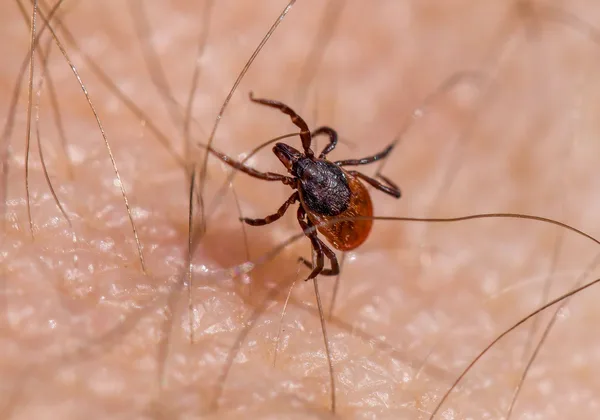 Photo: Erik Karits, Pexels
Tick-borne encephalitis (TBE, called KME in Croatian) is an inflammation of the central nervous system caused by a flavivirus. According to HZJZ, it is the second most common tick-borne disease in Croatia after Lyme disease. In continental Croatia the virus is carried by the castor bean tick, Ixodes ricinus, which lives on low vegetation up to about one metre high. Less often, people catch it from unpasteurised milk of infected animals, most often goats, according to the Andrija Štampar Institute.
The illness usually runs in two phases. After an incubation of 7 to 14 days on average, flu-like symptoms appear: fever, headache, tiredness and muscle pain. In some patients, after a short improvement, a second phase follows with meningitis or encephalitis. According to the ECDC, about two thirds of infections cause no symptoms, 20 to 30% of patients enter the second phase, and the fatality rate of the European subtype is 0.5 to 2%.
The HZJZ health statistics yearbook records 23 cases in Croatia in 2022 (two of them fatal), 9 in 2023 and 12 in 2024, with the 2024 figure marked as preliminary. Most cases traditionally occur in Koprivnica-Križevci and Bjelovar-Bilogora counties, followed by Varaždin and Međimurje, and natural hotspots also include the slopes of Medvednica above Zagreb, the area around Slavonski Brod and Gorski kotar.
Pros: case numbers are low compared with Austria or the Czech Republic, and the disease is effectively prevented by vaccination.
Cons: there is no specific treatment, and severe cases can leave lasting neurological damage.
Our opinion: A dozen reported cases a year does not mean zero risk if you live or hike in northern Croatia. For someone who walks Kalnik or Bilogora every weekend, the vaccine is a sensible investment in peace of mind.
2. Which vaccine is used in Croatia
 Photo: Thirdman, Pexels
The HALMED medicines database lists only two approved vaccines, both from Pfizer: FSME-Immun 0.5 ml for people aged 16 and over, and FSME-Immun 0.25 ml Junior for children aged 1 to 15. Encepur, used in Germany and Austria, is not approved in Croatia.
It is an inactivated vaccine, meaning it contains killed virus and cannot cause the disease. It is injected into the upper arm muscle, and into the thigh in children under 18 months. According to the product information, real-world effectiveness in Austria, the Czech Republic and other countries is over 92% against infection and over 95% against cases that end up in hospital.
It is also important to know what the vaccine does not do. It does not protect against Lyme disease, the other illness ticks transmit, and it is not given after a tick bite as emergency protection.
Pros: long-used vaccine with high effectiveness, a separate dose for children, available at all major institutes.
Cons: only one vaccine on the market, no protection against Lyme disease, no help after a bite.
Our opinion: If you started vaccination abroad with a different vaccine, bring your vaccination card to the institute. The doctor will decide how to continue, so you will not have to start over without need.
3. Schedule: how many doses and when to boost
 Photo: Gustavo Fring, Pexels
Primary TBE vaccination has three doses, following the schedule in the HALMED product information. The second dose comes 1 to 3 months after the first, and the third 5 to 12 months after the second. There is also a rapid schedule in which the second dose follows just 14 days after the first, useful if you remember late, right before the season.
After the third dose, protection lasts at least three years. The first booster is given three years after the third dose, then every five years. People over 60 get a booster every three years. If the schedule was interrupted and you have had at least two doses, one catch-up dose is enough according to the product information.
According to the Andrija Štampar Institute, 97% of vaccinated people are adequately protected after the second dose. The third dose is still needed for long-term protection.
| Dose | When | Note |
|---|---|---|
| 1st dose | chosen date | ideally in winter |
| 2nd dose | 1-3 months after the 1st (rapid: after 14 days) | protection for the current season |
| 3rd dose | 5-12 months after the 2nd | protection for at least 3 years |
| 1st booster | 3 years after the 3rd dose | |
| Further boosters | every 5 years (60+ every 3 years) |
Pros: clear schedule, a rapid option for late starters, an interrupted schedule does not mean starting over.
Cons: three doses and boosters mean more visits and a cost every few years.
Our opinion: Put the date of your next dose into your phone calendar right there in the clinic. The most common mistake is not giving up, but forgetting the third dose or the booster after three years.
4. When to get vaccinated
 Photo: Ilze Luīze Pauliņa, Pexels
In Croatia, ticks are most active from March to June and from September to October, according to the Primorje-Gorski Kotar public health institute. That is why the product information recommends the first and second doses in winter, so protection is in place before spring. For the 2027 season that means a first dose in December or January and a second in February or March.
TBE vaccination is also possible during the season, but then the rapid schedule with the second dose after 14 days is better. Vaccination is postponed if you have an acute illness with fever, so time the appointment for when you are healthy.
The third dose is ideally given in the same season or before the next, 5 to 12 months after the second. Someone who starts in January 2027 and gets the second dose in February would get the third between July 2027 and February 2028.
Pros: a winter start gives full protection for spring, and the rapid schedule covers late decisions.
Cons: it takes planning ahead, and winter colds can delay an appointment.
Our opinion: If you are planning spring hikes, call the institute in December. That way you get the first dose without rushing and the second before March.
5. Where to get vaccinated
 Photo: Polina Tankilevitch, Pexels
TBE vaccination is done by the epidemiology clinics of county public health institutes. According to the Ministry of Health's 2026 immunisation implementation programme, other health institutions and health workers may also buy the vaccine, so private clinics may offer it too.
In Zagreb, the Andrija Štampar Institute vaccinates at its clinic at Mirogojska cesta 16 on weekdays from 8:30 to 15:00, without an appointment. In Rijeka, the Primorje-Gorski Kotar institute vaccinates at Krešimirova 52a, also without an appointment. In Osijek the epidemiology service is at Drinska 8 (tel. 031 225 700), and for Zagreb County it is in Zaprešić (tel. 01 3319 109).
In the counties with the most cases, vaccination is offered by the Koprivnica-Križevci institute in Koprivnica and Križevci, the Bjelovar-Bilogora institute and the Međimurje institute. In Krapina-Zagorje County the vaccination clinic is in Zlatar, and in Sisak-Moslavina in Sisak, Petrinja and Kutina.
Pros: vaccination is available in every county, and in Zagreb and Rijeka without an appointment.
Cons: it is not available in every town, and smaller institutes do not publish their clinic hours, so you need to call.
Our opinion: Call before you go and ask whether they have the vaccine in stock, especially the children's dose. Štampar lists only the adult dose among its available vaccines, so check ahead for children.
6. How much it costs
 Photo: Marta Branco, Pexels
TBE vaccination in Croatia is not free. According to the 2026 immunisation implementation programme, institutes and other health workers buy this vaccine themselves and charge for the vaccination, unlike the flu vaccine, which the national health insurer HZZO pays for. Each of the three doses is charged separately.
Prices vary by institute, and some publish only the service fee without the vaccine. Here is what we found in official price lists:
| Institute | Price | Document |
|---|---|---|
| Zagreb County institute | €35.00 per vaccination | price list of 16 Sep 2026 |
| Osijek-Baranja institute | €40.50 vaccine (adults and children) | price list of 15 Oct 2025 |
| Primorje-Gorski Kotar institute | €54.43 per dose (adults and children) | page updated 17 Sep 2025 |
| Bjelovar-Bilogora institute | €15.00 service + vaccine purchase price | price list of March 2025 |
| Međimurje institute | €13.50 first visit, €10.18 repeat + vaccine | price list of 31 Jul 2026 |
| Andrija Štampar Institute | not published | - |
The Zagreb County list does not say whether the 35 euros includes the vaccine, and the Osijek list has a separate "vaccination service" item of 18.33 euros alongside the vaccine. For the three primary doses, budget roughly 105 to 180 euros per person in total, and confirm the exact price by phone.
Pros: prices are public at most institutes, and Međimurje also offers group vaccination for companies.
Cons: you pay for it, prices differ by up to 55%, and some institutes do not publish the vaccine price.
Our opinion: For a family of four, primary vaccination can cost over 500 euros. If you work outdoors, ask your employer about organising group vaccination, since some institutes offer it to companies.
7. Children, pregnancy and side effects
 Photo: Pavel Danilyuk, Pexels
TBE vaccination is possible from the first birthday, with the FSME-Immun Junior dose and on the same schedule as for adults. According to the product information, fever is more common after the first dose, especially in younger children: a mild fever of 38 to 39 °C occurred in 27.9% of children aged 1 to 2 and 6.8% of those aged 3 to 15. It usually passes within 24 hours and is less common after the second dose.
There is no data on use in pregnancy, so pregnant and breastfeeding women are vaccinated only when protection is urgent and after a doctor's assessment. Vaccination is not recommended for people with a severe allergy to egg or chicken proteins, or for those hypersensitive to neomycin, gentamicin or formaldehyde. For autoimmune diseases and weakened immunity, the doctor decides.
The most common side effect in adults is pain at the injection site, and headache, nausea, muscle pain and tiredness are also common. Severe reactions, such as allergic or neurological ones, are very rare.
Pros: children can be protected from their first birthday, and side effects are mostly mild and short.
Cons: fever in young children after the first dose is common, and there is no data for pregnancy.
Our opinion: If you are vaccinating a toddler, plan the first dose for a day you are home anyway. A 38 °C fever the next day is no cause for worry, but it is easier to handle without nursery and appointments.
Other ways to protect yourself from ticks
The vaccine protects only against tick-borne encephalitis, so other measures apply to everyone. HZJZ recommends long, light-coloured clothing, trousers tucked into socks, closed shoes and staying on marked paths. Apply repellent to skin and clothes, and after coming back from nature change clothes, shower and check your whole body, especially skin folds, armpits and children's scalps.
Even after TBE vaccination, remove a tick from your skin as soon as possible with tweezers, pulling gently outwards. If fever, headache or redness around the bite appears in the following weeks, see a doctor and mention the tick bite. We cover natural mosquito repellents in a separate repellent guide.
Conclusion
| If you are | What to do |
|---|---|
| A hiker, hunter or forestry worker in northern Croatia | First dose in winter, second before March, third by autumn |
| A parent of a child aged 1 to 15 | FSME-Immun Junior, check stock at the institute |
| Late to decide, with the season starting | Rapid schedule, second dose after 14 days |
| Over 60 | Booster every 3 years |
| Vaccinated 3-5 years ago | Check your card, you probably need a booster |
TBE vaccination makes sense for anyone who regularly spends time in the forests and meadows of continental Croatia. Three doses of FSME-Immun cost roughly 105 to 180 euros depending on the institute, and their effectiveness against hospitalised cases is over 95%. The most important thing is to start on time, in winter, and not to forget the third dose and boosters.
For the 2027 season, call your county institute in December or January, ask for the price including the vaccine and book the first dose. Alongside the vaccine, checking your body after hikes and good footwear, such as hiking shoes with a high cuff, reduce the risk of other tick-borne diseases too.
Frequently asked questions
How much does TBE vaccination cost in Croatia?
Prices vary by institute. At the Zagreb County institute TBE vaccination costs 35 euros, in Osijek the vaccine is 40.50 euros, and in Rijeka 54.43 euros per dose. For the three primary doses, budget roughly 105 to 180 euros per person in total.
Is the tick vaccine free in Croatia?
No. The vaccine is not part of the mandatory programme and HZZO does not pay for it. Under the Ministry of Health's 2026 immunisation implementation programme, institutes buy the vaccine themselves and charge for each dose. Some institutes offer group vaccination for companies, so it is worth asking your employer.
Where can I get a tick vaccine in Croatia?
At the epidemiology clinics of county public health institutes. In Zagreb, the Andrija Štampar Institute at Mirogojska cesta 16 vaccinates without an appointment, and in Rijeka the Primorje-Gorski Kotar institute at Krešimirova 52a. Private clinics may also offer the vaccine.
When is the best time to start TBE vaccination?
In winter, in December or January, so you get two doses before the spring tick season starts in March. If you are late, the rapid schedule allows the second dose just 14 days after the first.
How long does protection last?
After three doses, protection lasts at least three years. The first booster is given after three years, then every five years. People over 60 get a booster every three years.
Can children and pregnant women be vaccinated?
Children can be vaccinated from their first birthday with the FSME-Immun Junior dose. There is no safety data for pregnant women, so they are vaccinated only when protection is urgent and after a doctor's assessment.
How we researched
For this guide to TBE vaccination we took all data on the vaccine, schedule and side effects from the product information approved by HALMED, and epidemiological data from the HZJZ yearbook and ECDC reports. Prices come directly from county public health institute price lists, with the date of each document, checked on 22 October 2026. Where an institute does not publish a price, we say so clearly.
This guide does not replace medical advice. Discuss vaccination with chronic illness, allergies or pregnancy with the doctor at the institute or your family doctor.
Sources
- HZJZ - Ticks and the diseases they transmit
- HZJZ - Croatian Health Statistics Yearbook 2024, infectious diseases
- HALMED - Product information FSME-IMMUN 0.5 ml
- HALMED - Product information FSME-IMMUN 0.25 ml Junior
- Ministry of Health - Immunisation implementation programme 2026
- ECDC - Factsheet about tick-borne encephalitis
- Andrija Štampar Institute - Tick season: what you need to know
- Zagreb County institute - Price list of 16 Sep 2026
- Osijek-Baranja institute - Epidemiology price list
- Primorje-Gorski Kotar institute - Vaccinations
- Međimurje institute - Price list of 31 Jul 2026
Related articles: