
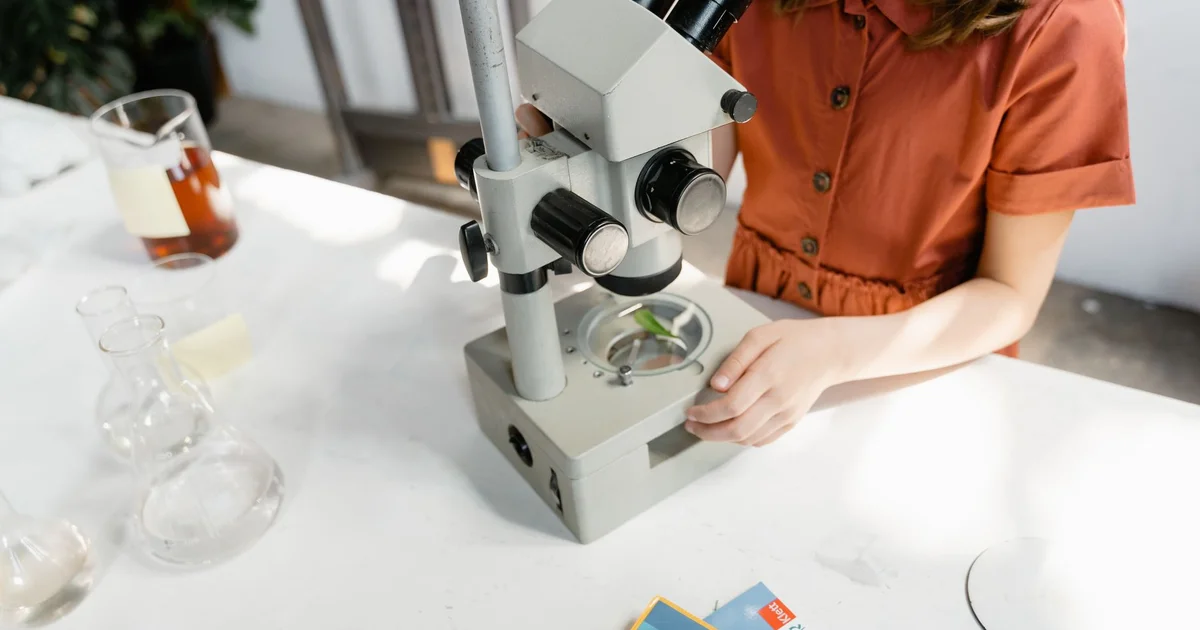

A drop of pond water, a plant leaf or a grain of salt under a microscope open a whole invisible world and spark a child's curiosity. Microscopes for kids are one of the best gifts for little explorers because they teach observation, science and patience through play. So we singled out the best microscopes for kids 2026, from classic optical to digital USB models and stereo microscopes. For each we list the age, who it is best for and a rough price.
A good kids microscope has a clear image, LED light and accessories to start, and magnification suited to the age. It is important to know that higher magnification is not always better, because the quality of the lenses and lighting matters more than the highest number on the box. This guide is for parents who want to encourage curiosity, with honest advice on magnification, age and how to fit microscopes for kids into learning.
Quick overview
These microscopes for kids cover every age and purpose, from first steps to advanced and digital exploration. Below is a quick overview before the details.
| # | Product | Type | For whom | Price | Best for |
|---|---|---|---|---|---|
| 1 | National Geographic 40x-640x | Optical | 8+ | ~40 EUR | Best overall |
| 2 | Bresser Junior 40x-640x | Optical | 8+ | ~30 EUR | Budget |
| 3 | Learning Resources GeoSafari Jr. | For young | 4-8 | ~25 EUR | Youngest |
| 4 | Bresser Junior USB 40x-1024x | Digital | 8+ | ~60 EUR | On screen |
| 5 | Bresser Biolux SEL | Advanced | 10+ | ~80 EUR | Teens |
| 6 | Carson MicroBrite Plus | 8+ | ~15 EUR | Outdoors | |
| 7 | Bresser Junior 20x Stereo | Stereo | 6+ | ~50 EUR | 3D view |
1. National Geographic 40x-640x
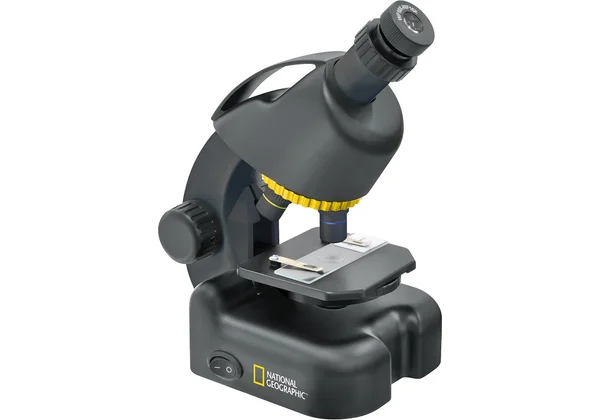
Photo: National Geographic
For an entry into science, the National Geographic 40x-640x is the best and most versatile choice. It is a real optical microscope with LED light, rich accessories and a phone holder, so it sparks curiosity and teaches the basics of observation. For a child who explores, that combination of quality and accessories comes in very handy.
The magnification range from 40x to 640x covers prepared slides and your own samples, and LED light gives a clear and bright image. Included slides and tools let you start right away, and the phone holder allows recording and sharing discoveries with the family.
It needs adult company at the start, and the highest magnification is more for show than for a sharp image. But for a quality image, rich accessories and phone recording, the National Geographic 40x-640x is the first choice. STEM toys for kids come in handy alongside it.
| Specification | Detail |
|---|---|
| Magnification | Range 40x to 640x for various samples |
| Lighting | LED light for a clear image |
| Accessories | Prepared slides and tools in the kit |
| Phone | A holder for recording with a phone |
Pros: a quality image for the price, LED light and rich accessories, a holder for phone recording.
Cons: needs adult company at the start, the highest magnification is more for show.
Our opinion: We recommend the National Geographic 40x-640x as the first choice for curious kids. A quality image, accessories and phone recording encourage exploration. Help with setup at the start, because that makes the difference.
2. Bresser Junior 40x-640x
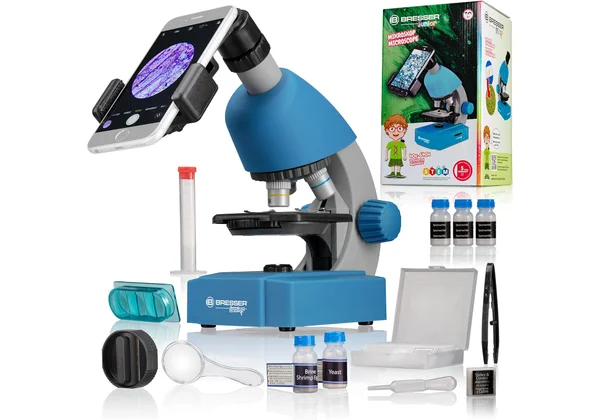
Photo: Bresser
For an affordable entry, the Bresser Junior 40x-640x is a kids microscope with LED light and accessories at a low price. It is ideal for first steps into microscopy, without a big spend on a first device. For trying out the hobby or a gift, it is hard to find a better ratio.
The range from 40x to 640x covers basic samples and slides, and LED light from below gives enough light for a clear image. A sturdy kids build withstands daily handling, and included slides and tools are enough to start.
The plastic build is of basic quality, and the image is weaker than more expensive models. But for a very low price, LED light and accessories, the Bresser Junior 40x-640x is an excellent choice to start.
| Specification | Detail |
|---|---|
| Magnification | Range 40x to 640x |
| Lighting | LED light from below |
| Accessories | Slides and tools to start |
| Build | A sturdy kids build |
Pros: very affordable, LED light and accessories, sturdy for kids.
Cons: a basic-quality plastic build, a weaker image than more expensive models.
Our opinion: We pick the Bresser Junior 40x-640x for an affordable entry and trying out the hobby. LED light and accessories cover the basics without a big spend. The image is weaker than pricier ones, but for the start it is excellent.
3. Learning Resources GeoSafari Jr.
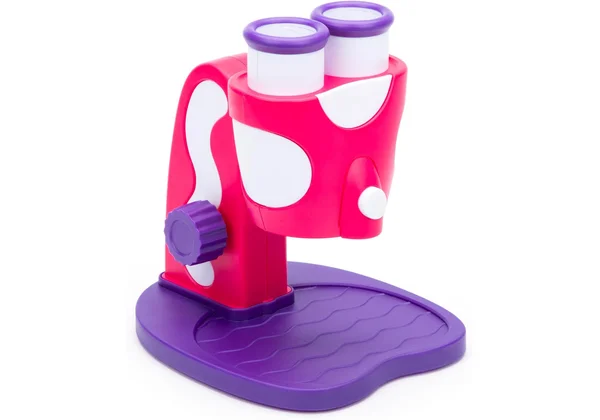
Photo: Learning Resources
For young children aged four to eight, the Learning Resources GeoSafari Jr. is a microscope with a large double eyepiece for both eyes. It is adapted to small hands and eyes, so the child looks with both eyes without strain and easily finds the sample. For the youngest explorers, it is the right choice.
A large double eyepiece makes viewing easier even for the youngest, and simple and safe handling reduces the need for constant help. LED light illuminates the samples, so the image is bright and easy to view.
The magnification is lower for fine detail, and for older kids it is too simple. But for a large eyepiece, simple handling and the youngest age, the Learning Resources GeoSafari Jr. does the job well. Look at hobbies that develop a child's brain alongside it.
| Specification | Detail |
|---|---|
| Eyepiece | A large double eyepiece for both eyes |
| Age | Suited to ages 4 to 8 |
| Handling | Simple and safe handling |
| Lighting | LED light for easy viewing |
Pros: a large eyepiece for both eyes, ideal for small hands, simple and safe.
Cons: lower magnification for detail, too simple for older kids.
Our opinion: We pick the Learning Resources GeoSafari Jr. for the youngest. A large eyepiece and simple handling are perfect for small hands and eyes. For older kids take a classic one, but for preschoolers it is excellent.
4. Bresser Junior USB 40x-1024x
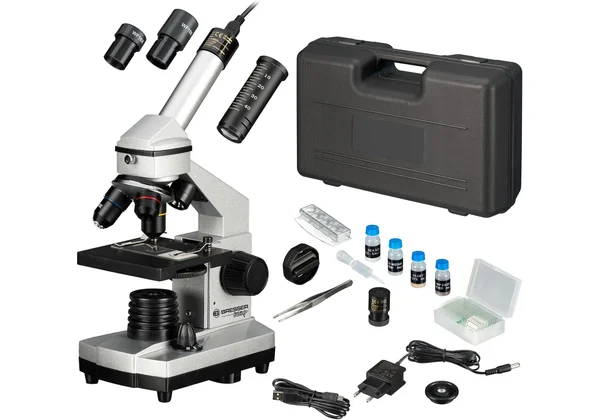
Photo: Bresser
For shared viewing on a screen, the Bresser Junior USB 40x-1024x has a USB camera that transfers the image to a computer. Instead of everyone looking through the eyepiece, the whole family observes the samples on a screen at once, which makes learning and sharing easier. For working with parents and joint exploration, it is the right choice.
The USB camera transfers the image to a computer, where samples are viewed large and clear, with the option of recording images and video. The magnification range from 40x to 1024x covers various samples, and recordings are easily saved and shown.
The camera needs a computer, and the optics are of basic quality. But for an image on the screen, recording and shared viewing, the Bresser Junior USB 40x-1024x is an excellent choice. A kids tablet comes in handy alongside it for reviewing recordings.
| Specification | Detail |
|---|---|
| USB camera | Transfers the image to a computer |
| Magnification | Range 40x to 1024x |
| Sharing | Shared viewing on a screen |
| Recording | Recording images and video |
Pros: an image on the screen for everyone, a USB camera and recording, a good magnification range.
Cons: needs a computer for the camera, basic-quality optics.
Our opinion: We pick the Bresser Junior USB 40x-1024x for shared viewing and recording. An image on the screen turns exploration into a family activity. It needs a computer, but for sharing and recording it is excellent.
5. Bresser Biolux SEL
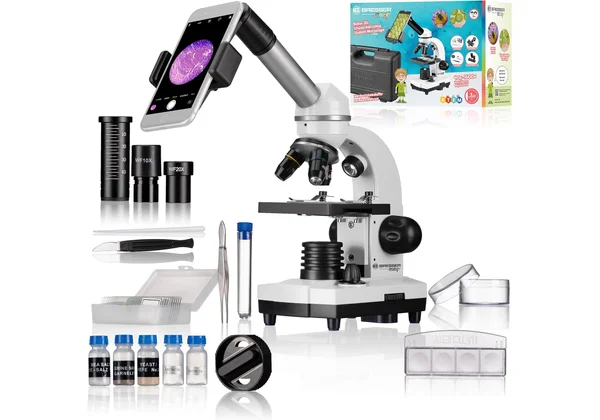
Photo: Bresser
For older children and teens, the Bresser Biolux SEL is a student microscope with higher magnification and better optics. It is a real step up from kids models, with LED light from above and below and rich accessories for more serious exploration. For young scientists, it is the right choice.
Better student optics give a sharper image, and lighting from above and below allows viewing of both transparent and opaque samples. A rich set of accessories and slides opens a wide range of experiments and observations for schools and home labs.
The highest magnification is often empty, as with other models, and the microscope is more expensive and demanding for the young. But for better optics, dual lighting and advanced exploration, the Bresser Biolux SEL does the job well.
| Specification | Detail |
|---|---|
| Magnification | Up to 1600x for detailed samples |
| Optics | Better student optics |
| Lighting | LED light from above and below |
| Accessories | A rich set of accessories and slides |
Pros: better optics, LED from above and below, rich accessories for exploration.
Cons: the highest magnification is often empty, more expensive and demanding for the young.
Our opinion: We pick the Bresser Biolux SEL for older children and teens. Better optics and dual lighting open more serious experiments. It is demanding for the young, but for budding scientists it is excellent.
6. Carson MicroBrite Plus
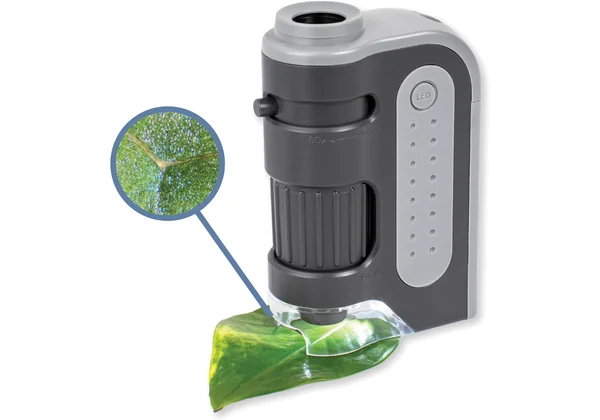
Photo: Carson
For exploration on the move, the Carson MicroBrite Plus is a pocket microscope with LED light and magnification from 60x to 120x. It is tiny and fits in a pocket, so you carry it into nature and view leaves, insects and minerals on the spot. For outdoors and trips, it is the right choice.
The tiny format and built-in LED light allow quick observation anywhere, without a table or power. For curiosity on a walk, in the park or on the beach, this pocket microscope turns every trip into a little exploration.
It has no stand, so it is held by hand, and it is meant for quick observation, not long work. But for a tiny format, LED light and a very low price, the Carson MicroBrite Plus is an excellent choice for the outdoors.
| Specification | Detail |
|---|---|
| Format | A tiny pocket microscope |
| Magnification | Range 60x to 120x |
| Light | Built-in LED light |
| Portability | Fits in a pocket for the outdoors |
Pros: tiny and portable, LED light, very affordable for the outdoors.
Cons: no stand, held by hand, only for quick observation.
Our opinion: We pick the Carson MicroBrite Plus for the outdoors and trips. It fits in a pocket and turns a walk into an exploration. It has no stand, but for quick observation in nature it is excellent.
7. Bresser Junior 20x Stereo
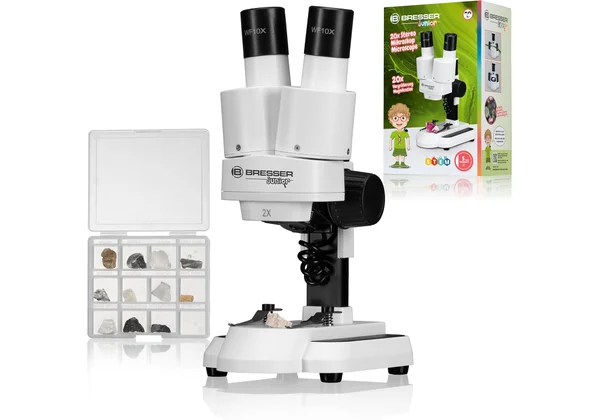
Photo: Bresser
For a three-dimensional view, the Bresser Junior 20x Stereo is a microscope with low magnification that gives a 3D image. Unlike classic ones, it is perfect for larger objects like insects, coins, minerals and plants, which look solid and real. For collectors and nature lovers, it is the right choice.
Low magnification around 20x and stereo optics give a three-dimensional image, so objects are seen with depth, not flat. LED light on the object illuminates the sample from above, which is ideal for opaque things like rocks and coins.
It is not for cells and tiny samples, and its purpose is narrower than a classic microscope. But for a three-dimensional image, larger objects and nature, the Bresser Junior 20x Stereo is an excellent and fun choice.
| Specification | Detail |
|---|---|
| Type | A stereo microscope for a 3D image |
| Magnification | Low magnification around 20x |
| Use | Insects, coins, minerals and plants |
| Lighting | LED light on the object |
Pros: a three-dimensional image, for larger objects and nature, fun for collectors.
Cons: not for cells and tiny samples, a narrower purpose than a classic one.
Our opinion: We pick the Bresser Junior 20x Stereo for 3D observation of nature and collections. Insects and minerals look solid and real. It is not for cells, but for larger objects and fun it is excellent.
Microscopes for kids: buying guide
Microscopes for kids are chosen by age and type, so first choose the type by what the child wants to view. For the youngest aged four to eight the best are simple models with a large eyepiece, for schoolchildren classic optical microscopes with accessories, and for teens more advanced devices with better optics. For larger objects and nature a stereo microscope is chosen, and for shared viewing a digital USB model.
Then look at magnification and lighting, but watch for the trap. Higher magnification is not always better, because above around 400x the image on cheaper models is often blurry and empty. The quality of the lenses and LED light matters more, giving a clear and bright image, so do not choose a microscope by the highest number on the box alone. Prepared slides and tools help beginners start right away.
Finally, think about the adult's role and the child's age. A microscope sparks curiosity and teaches science, but at the start it needs adult company for setting up the sample and focusing. Link observation to what the child is learning and to the nature around the house, because even a drop of water or a leaf offers hours of exploration. For more ideas look at STEM toys for kids.
Conclusion
The right choice of microscopes for kids depends on the age, the type and what the child wants to explore. For most the best is the National Geographic 40x-640x, for an affordable entry the Bresser Junior 40x-640x, and for the youngest the GeoSafari Jr. For viewing on a screen there is the Bresser Junior USB, for teens the Biolux SEL, for the outdoors the pocket Carson MicroBrite Plus, and for a 3D view the Bresser Junior 20x Stereo.
Whatever you choose, look at the quality of the lenses and lighting instead of the highest magnification, match the model to the age and be with the child at the start. With guidance and a little imagination, microscopes for kids become a window into the invisible world and a spark of love for science.
| User profile | Recommendation | Price |
|---|---|---|
| Most (best overall) | National Geographic 40x-640x | ~40 EUR |
| Affordable entry | Bresser Junior 40x-640x | ~30 EUR |
| Youngest 4-8 | Learning Resources GeoSafari Jr. | ~25 EUR |
| Viewing on a screen | Bresser Junior USB 40x-1024x | ~60 EUR |
| Teens 10+ | Bresser Biolux SEL | ~80 EUR |
| Outdoors and trips | Carson MicroBrite Plus | ~15 EUR |
| 3D observation | Bresser Junior 20x Stereo | ~50 EUR |
With the right choice of microscopes for kids and a little guidance, an ordinary drop of water becomes an adventure, and curiosity grows into a love of science. Choose the model by age, look at quality instead of the highest magnification, and explore together.
Frequently asked questions
Which microscope for kids is best?
For most children the best is a real optical microscope with LED light and accessories, like the National Geographic 40x-640x. For the youngest the GeoSafari Jr. with a large eyepiece is excellent, and for shared viewing a digital USB model. The leading brands are Bresser, National Geographic and Learning Resources.
From what age a microscope for a child?
Simple microscopes with a large eyepiece are suitable from around four years with adult company, and classic school ones from six to eight years. It is important that the model matches the age and that adults help with setup and slides. With guidance, a microscope sparks curiosity and a love of science.
What magnification does a kids microscope need?
For most samples magnification up to around 400x is enough, because above that the image is often blurry and empty. More important than the highest number is the quality of the lenses and lighting, which gives a clear and bright image. Do not choose a microscope by the highest magnification on the box alone.
Digital or classic microscope for kids?
A classic microscope through the eyepiece gives a direct and clear view, while a digital one with a USB camera transfers the image to a screen for shared viewing and recording. For independent exploration a classic one is good, and for sharing the image and working with family a digital one. Many combine both approaches.
What is a microscope for kids for?
A microscope reveals to children the invisible world of cells, microorganisms, plants and minerals, and teaches them observation and scientific thinking. Along with fun it develops curiosity, patience and a love of biology. As a learning tool, it is best with adult guidance and linked to what the child is learning.
What can you look at with a microscope?
With a microscope you view prepared slides of cells, a drop of pond water, parts of plants, fibres, salt and sugar crystals and tiny insects. A stereo microscope shows larger objects in three dimensions, like coins and minerals. Even ordinary samples from the house and yard provide hours of exploration.
How we chose
In compiling this list of microscopes for kids we relied on independent tests and recommendations, rather than marketing. We checked the data through a kids microscope test at Live Science, a review at BBC Science Focus and a microscopy guide at Microscope World.
We deliberately mixed classic, digital, stereo and pocket microscopes for kids, so that every age and purpose finds its own. We placed special emphasis on the quality of the lenses and lighting and honesty about magnification and the role of adults. Prices change through the year, so we listed them roughly, in euros.
Sources
- Best microscopes for kids 2026 - Live Science
- Best kids microscopes - BBC Science Focus
- How to choose a microscope - Bresser
- Microscopy for beginners - Microscope World
- STEM learning at home - Science Museum
- Nurturing curiosity in children - Cleveland Clinic