
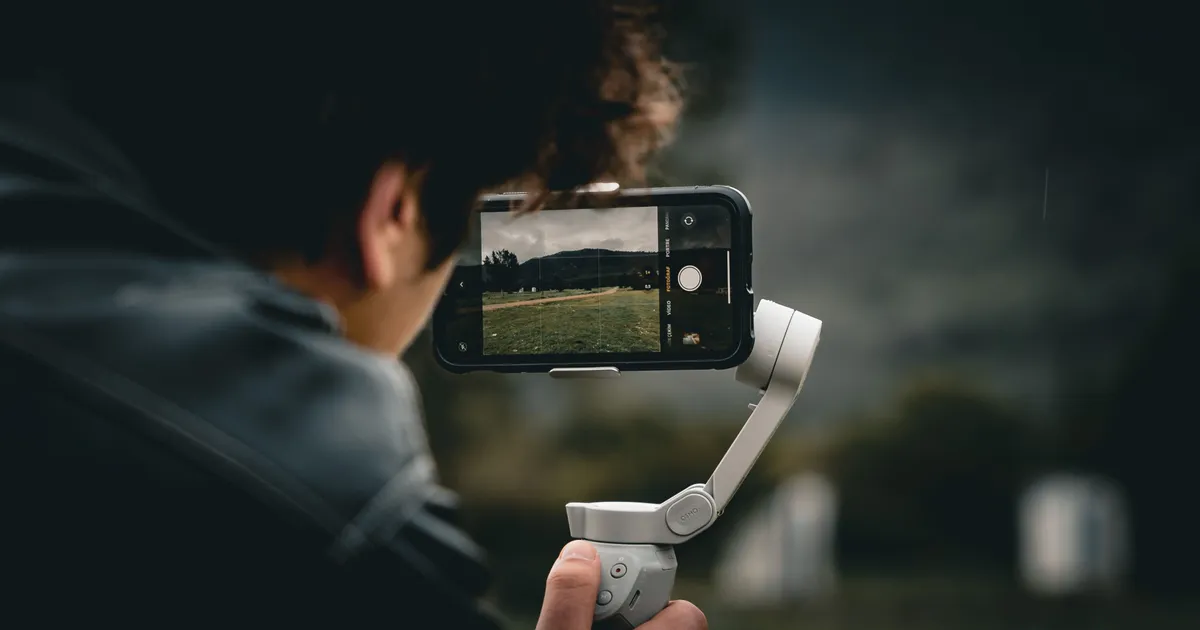

The gimbal stabilizers in this comparison cost from 55.00 euros for the DJI Osmo Mobile SE to 419.00 euros for the DJI RS 4 for cameras on Amazon.de. This guide is for people who shoot vlogs, travel, kids or social media content on a phone, and for mirrorless camera owners who want steady shots on the move. The best gimbal stabilizers of 2027 are the DJI Osmo Mobile 8 as the best phone gimbal (138.43 euros), the Insta360 Flow 2 Pro as the best pick for iPhone (169.99 euros) and the DJI RS 4 Mini as a compact gimbal for mirrorless cameras (288.90 euros). We compared seven models with live prices on 7 November 2026.
First weigh your phone or camera with its case and accessories, because payload decides which gimbals are even an option.
Quick overview: the best gimbal stabilizers of 2027
All gimbals in this comparison are available on Amazon.de. Click a name to see the current price.
| Model | For | Payload | Tracking | Battery | Price | Best for |
|---|---|---|---|---|---|---|
| DJI Osmo Mobile 8 | phone | 300 g | app, DockKit, module | up to 10 h | €138.43 | Best overall |
| Insta360 Flow 2 Pro | phone | 300 g | DockKit, app | up to 10 h | €169.99 | iPhone |
| DJI Osmo Mobile SE | phone | 290 g | app | about 8 h | €55.00 | Budget |
| Hohem iSteady V3 Ultra | phone | 400 g | AI module, any app | about 9 h | €179.00 | Android |
| Hohem iSteady M7 | phone | 500 g | AI module, any app | up to 12 h | €299.00 | Heavy phones |
| DJI RS 4 Mini | camera | 2 kg | add-on module | up to 13 h | €288.90 | Mirrorless |
| DJI RS 4 | camera | 3 kg | not built in | up to 12 h | €419.00 | Full-frame |
Data comes from the official DJI and Insta360 websites, Hohem's Amazon.de listings and TechRadar and Digital Camera World reviews. Battery life is the maker's figure for a balanced gimbal without accessories.
How to choose a gimbal stabilizer
Do you need a gimbal if your phone has stabilization
Gimbal stabilizers aren't necessary for every video. Optical and electronic stabilization in a phone steadies the shot well while you stand still or walk slowly. Electronic stabilization crops the edge of the frame, though (YMCinema), and footsteps still cause small jitters, which a gimbal removes mechanically while keeping the full frame (Android Authority). Gimbal stabilizers pay off for walking shots, following a person, pans and timelapses. If you leave strong phone stabilization on with a gimbal, the image can look "floaty", so turn it off or down and test.
Payload: weigh your phone with its case
Phone gimbal stabilizers mostly carry about 300 g and phones up to 10 mm thick (TechRadar). Add up the phone, case, a 25 to 31 g magnetic clamp and any mic or light you put on the phone. An iPhone 17 Pro Max weighs about 233 g, so with a case it is quickly close to the 300 g limit. For heavy phones choose a Hohem with 400 or 500 g, and for foldables the Hohem iSteady M7. For cameras, count the body, lens and accessories: the DJI RS 4 Mini carries up to 2 kg and the RS 4 up to 3 kg.
Tracking and DockKit
Modern gimbal stabilizers have tracking, which turns the phone to follow the person you're filming, so you can film yourself. On most gimbals it only works in the maker's app, while Apple's DockKit, since iOS 17, enables tracking in the iPhone camera and other apps, on iPhone 12 and newer (Apple, Insta360). Android has no DockKit, so only a gimbal with its own AI module, like the Hohems and the DJI Osmo Mobile 8, gives you tracking in every app on Android.
Magnetic or fixed clamp
DJI and Insta360 use a magnetic clamp that stays on the phone and snaps onto the gimbal in a second, with no rebalancing. Hohem has a fixed clamp on the gimbal, which takes wider and heavier phones, but setup is slower. Make sure the clamp doesn't press the phone's side buttons.
Battery and charging
The battery life makers quote for gimbal stabilizers applies to a balanced gimbal that's standing still. DJI rates the Osmo Mobile 8 at 10 hours, but 5 hours with tracking and 4 hours with tracking and the light at maximum (DJI). The Osmo Mobile 8, Insta360 Flow 2 Pro and Hohem M7 can charge your phone, which shortens the gimbal's runtime. All models in the comparison charge over USB-C.
Apps on Android
DJI's Mimo and Ronin apps aren't currently on Google Play, so Android owners download them from DJI's website. DJI's Amazon.de listings say so too. On iPhone the apps install normally from the App Store.
1. DJI Osmo Mobile 8
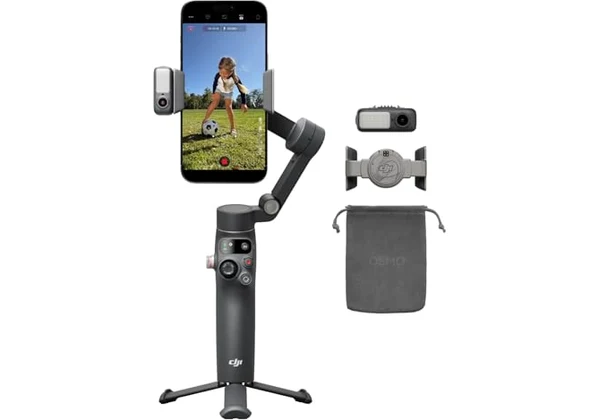 Photo: DJI, Amazon
Of all the phone gimbals in the comparison, only the DJI Osmo Mobile 8 has three ways to track: in the DJI Mimo app, through Apple's DockKit and through a module with its own camera that follows people, dogs and cats in any app (TechRadar). Rotation is unlimited, 360 degrees, and the handle has a built-in 215 mm extension rod and a mini tripod. It carries phones from 170 to 300 g and 67 to 84 mm wide.
The module in the box also has a light and works as a receiver for DJI's Mic Mini, Mic 2 and Mic 3 microphones. The 3350 mAh battery lasts up to 10 hours, and the gimbal can also charge your phone. It weighs 370 g and folds to 190 x 95 x 46 mm. There's no remote, and on Android the Mimo app has to be downloaded from DJI's website.
| Feature | Detail |
|---|---|
| Payload | 170-300 g, up to 10 mm thick |
| Tracking | Mimo, DockKit, module (any app) |
| Rotation | 360°, unlimited |
| Rod and tripod | built in (215 mm) |
| Battery | up to 10 h (5 h with tracking), charges phone |
| Weight | 370 g |
| Price | €138.43 |
Pros: three kinds of tracking, unlimited rotation, built-in rod and tripod, charges your phone, link to DJI microphones.
Cons: no remote, 300 g maximum, Android app not on Google Play.
Our opinion: The Osmo Mobile 8 is the gimbal we'd recommend to most people. Tracking in every app, a rod and a tripod for 138 euros are the best mix of price and features in the comparison.
2. Insta360 Flow 2 Pro
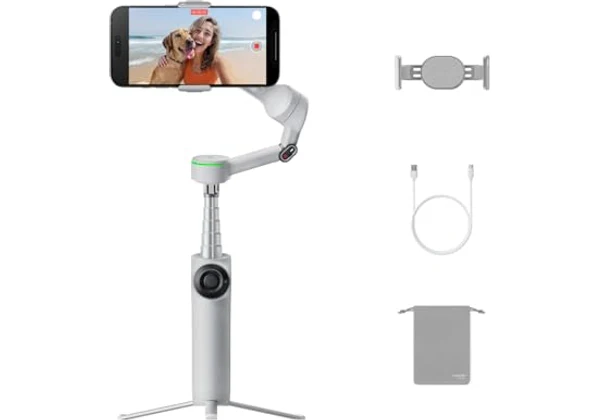 Photo: Insta360, Amazon
The Insta360 Flow 2 Pro is built above all for iPhone: through DockKit it tracks a person in more than 200 iOS apps, including the iPhone camera, with no extra module. In the Insta360 app it can track a group and keep tracking while zoomed in up to 15x (on iPhone Pro models, according to Insta360) (TechRadar). Rotation is unlimited, and the handle has a 210 mm selfie stick and a tripod.
It carries phones from 130 to 300 g, and one reviewer notes the motors struggle above about 330 g. The battery lasts up to 10 hours, and a USB-C output on the handle can top up your phone. Folded it measures 98 x 178 x 37 mm and weighs 357 g. On Android, tracking only works in the Insta360 app, and the light and hard case are sold separately.
| Feature | Detail |
|---|---|
| Payload | 130-300 g, up to 10 mm thick |
| Tracking | DockKit (200+ apps), Insta360 app |
| Rotation | 360°, unlimited |
| Rod and tripod | built in (210 mm) |
| Battery | up to 10 h, charges phone |
| Weight | 357 g |
| Price | €169.99 |
Pros: tracking in more than 200 apps on iPhone, compact, quick to unfold, built-in rod and tripod.
Cons: on Android tracking only in the Insta360 app, light costs extra, 300 g maximum.
Our opinion: For an iPhone owner filming in the iPhone camera or on TikTok, the Flow 2 Pro is the simplest choice: open the app and the gimbal is already tracking.
3. DJI Osmo Mobile SE
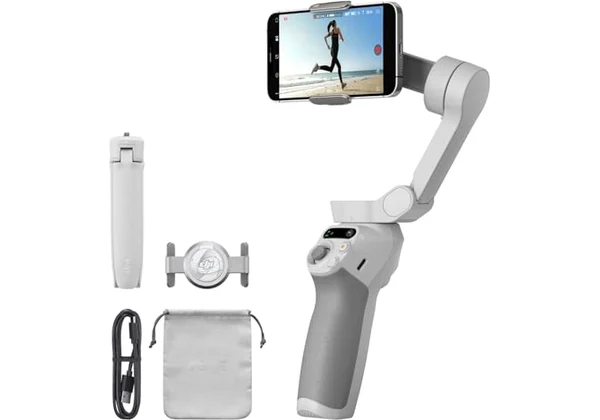 Photo: DJI, Amazon
At 55 euros, the DJI Osmo Mobile SE is the cheapest gimbal in the comparison. It has a magnetic clamp, folds up and carries phones from 170 to 290 g, and ActiveTrack 6.0 tracking works in the DJI Mimo app (DJI). A 138 mm mini tripod is in the box.
The 2600 mAh battery lasts about 8 hours. There's no extension rod, DockKit or tracking module, so it only tracks in DJI's app. It weighs 352 g, with the magnetic clamp another 31 g. For beginners and occasional filming it does exactly what's needed.
| Feature | Detail |
|---|---|
| Payload | 170-290 g |
| Tracking | ActiveTrack 6.0 in the Mimo app |
| Clamp | magnetic |
| Rod | none, tripod in the box |
| Battery | about 8 h |
| Weight | 352 g |
| Price | €55.00 |
Pros: lowest price, magnetic clamp, ActiveTrack in the app, foldable.
Cons: no extension rod, no DockKit or module, tracking only in DJI's app, shorter battery.
Our opinion: If you're not sure you'll use a gimbal, the SE is a cheap way to try one. For 55 euros you also get a magnetic clamp, like the pricier DJI models.
4. Hohem iSteady V3 Ultra
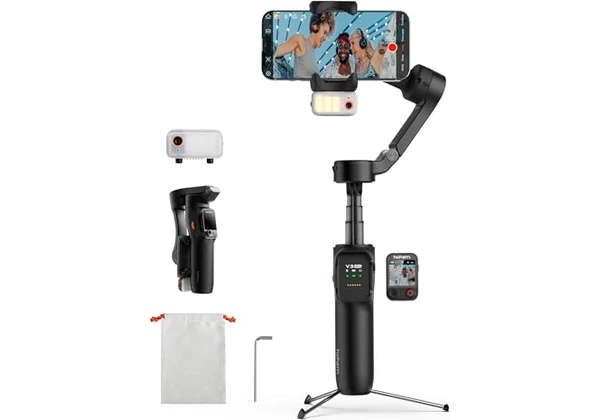 Photo: Hohem, Amazon
For Android owners, the Hohem iSteady V3 Ultra solves the main gimbal problem: a magnetic AI module with its own camera tracks faces, bodies, pets, vehicles and objects in any app (Digital Camera World). It carries phones up to 400 g and up to 98 mm wide, and rotation is unlimited.
The box includes a detachable remote with a 1.22-inch screen and 10-metre range, showing the image from the module. The module also has a tri-colour light, and the handle hides a 20 cm extension rod and a tripod. The battery lasts about 9 hours, or about 4 hours with tracking and the light. TechRadar notes the phone's mic picks up motor noise, and there's no magnetic clamp.
| Feature | Detail |
|---|---|
| Payload | up to 400 g, up to 98 mm wide |
| Tracking | AI module, any app |
| Remote | with 1.22" screen, 10 m range |
| Light | tri-colour, on the module |
| Battery | about 9 h (4 h with tracking and light) |
| Weight | 428 g |
| Price | €179.00 |
Pros: tracking in every app, even on Android, remote with screen, carries up to 400 g, tracks objects too.
Cons: phone mic picks up motor noise, no magnetic clamp, doesn't fit some large and foldable phones.
Our opinion: On Android, the V3 Ultra is the best choice if you need tracking in Instagram or TikTok. Use an external mic for sound, because you can hear the motors.
5. Hohem iSteady M7
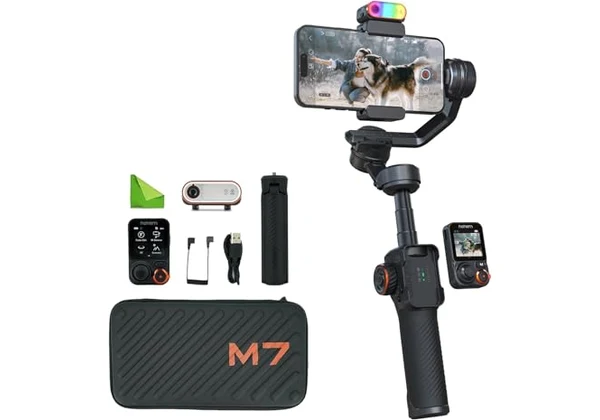 Photo: Hohem, Amazon
The Hohem iSteady M7 carries phones up to 500 g and up to 12.5 mm thick, so foldables, chunky cases and add-on lenses fit (TechRadar). A detachable magnetic AI module of about 20 g tracks in any app, and the remote has a 1.4-inch screen and a range of about 10 metres.
The gimbal has front and rear RGB lights, a telescopic rod, a tripod and three threads for accessories. The 3200 mAh battery lasts up to 12 hours, about 8 hours with tracking, and can charge your phone. At 629 g and about 34 cm long folded it's not pocketable, and Hohem's app is sometimes clunky.
| Feature | Detail |
|---|---|
| Payload | up to 500 g, up to 12.5 mm thick |
| Tracking | magnetic AI module, any app |
| Remote | with 1.4" screen, about 10 m range |
| Light | front and rear RGB |
| Battery | up to 12 h (8 h with tracking), charges phone |
| Weight | 629 g |
| Price | €299.00 |
Pros: highest payload in the comparison, tracking in every app, remote with screen, two lights, hard case.
Cons: big and heavy, expensive, no magnetic clamp, clunky app.
Our opinion: The M7 is for content creators with a heavy phone and accessories. If your phone with its case and accessories weighs under 300 g, the Osmo Mobile 8 gives you similar features for half the price.
6. DJI RS 4 Mini
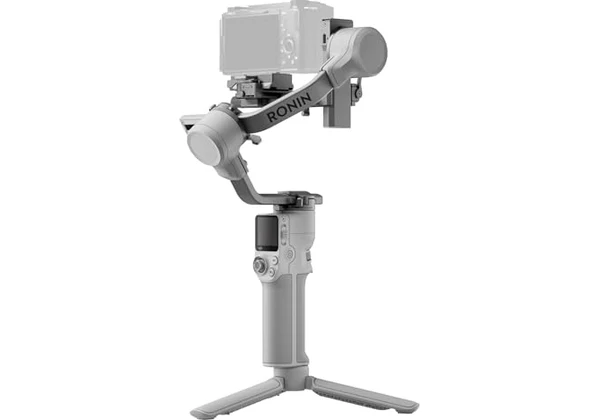 Photo: DJI, Amazon
For mirrorless cameras, the compact DJI RS 4 Mini carries 0.4 to 2 kg, enough for APS-C and lighter full-frame kits (DJI). It weighs 890 g, and automatic axis locks get it ready in about a second, according to DJI. It switches to vertical shooting for Instagram and TikTok without extra gear.
The battery lasts up to 13 hours and recharges in about 1 hour 50 minutes with a 30 W charger. The DJI RS Intelligent Tracking Module is sold separately or in a combo. With an extra holder it can also carry a phone. Near the 2 kg limit with heavy lenses there's little headroom, and the Ronin app isn't on Google Play for Android.
| Feature | Detail |
|---|---|
| Payload | 0.4-2 kg |
| Axis locks | automatic |
| Vertical shooting | no extra gear |
| Tracking | add-on module (separate) |
| Battery | up to 13 h |
| Weight | 890 g |
| Price | €288.90 |
Pros: light and compact, automatic axis locks, quick switch to vertical, long battery, can also carry a phone.
Cons: tracking module costs extra, balancing still takes time, little headroom at 2 kg.
Our opinion: For an APS-C camera with a kit lens, the RS 4 Mini is enough, and at 890 g it's less tiring on a full day of shooting than bigger gimbals.
7. DJI RS 4
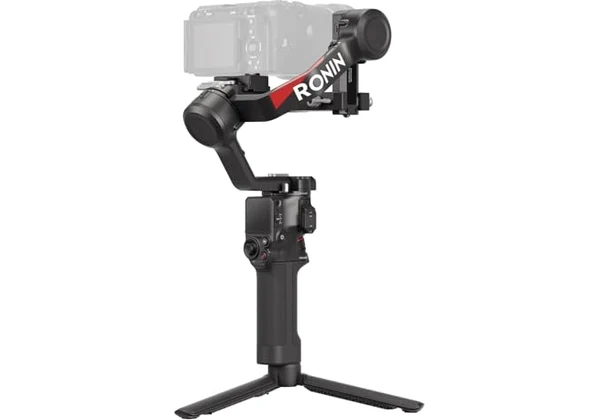 Photo: DJI, Amazon
The DJI RS 4 carries up to 3 kg (DJI). A Sony A7 IV with a 24-70 mm f/2.8 weighs about 1.4 kg together, so there's plenty of headroom. It has a touchscreen, automatic axis locks, second-generation vertical shooting without extra gear and a physical mode switch. The BG21 battery grip in the box gives up to 12 hours.
With the grip the gimbal weighs about 1.27 kg. The separate BG70 grip extends runtime to 29.5 hours and powers the camera at up to 18 W, and tracking isn't built in. For heavy cinema lenses DJI offers the RS 4 Pro with a 4.5 kg payload. The Ronin app isn't on Google Play for Android.
| Feature | Detail |
|---|---|
| Payload | 3 kg |
| Screen | touchscreen |
| Axis locks | automatic |
| Vertical shooting | no extra gear |
| Battery | up to 12 h (BG21), up to 29.5 h (BG70, separate) |
| Weight | about 1.27 kg with grip |
| Price | €419.00 |
Pros: 3 kg payload for full-frame with headroom, vertical shooting, automatic locks, wide accessory range.
Cons: expensive, heavier, no built-in tracking, Android app not on Google Play.
Our opinion: The RS 4 is for weddings, ads and anyone putting a full-frame camera with a heavy lens on a gimbal. For lighter kits, the RS 4 Mini saves 130 euros and almost 400 g.
Conclusion: which gimbal stabilizer to choose?
For most people the best choice is the DJI Osmo Mobile 8: tracking in every app, a built-in rod and tripod for 138.43 euros. For iPhone owners the simplest is the Insta360 Flow 2 Pro, on the smallest budget the DJI Osmo Mobile SE is enough, and on Android and for heavy phones the Hohem V3 Ultra and M7 are best. For cameras, the DJI RS 4 Mini covers mirrorless up to 2 kg and the RS 4 full-frame up to 3 kg. Gimbal stabilizers are chosen by the weight of your phone or camera first, and by extras second.
| If what matters most is | Choose | Price |
|---|---|---|
| Best overall for phones | DJI Osmo Mobile 8 | €138.43 |
| iPhone and DockKit | Insta360 Flow 2 Pro | €169.99 |
| Lowest price | DJI Osmo Mobile SE | €55.00 |
| Android, tracking in any app | Hohem iSteady V3 Ultra | €179.00 |
| Heavy and foldable phones | Hohem iSteady M7 | €299.00 |
| Mirrorless up to 2 kg | DJI RS 4 Mini | €288.90 |
| Full-frame up to 3 kg | DJI RS 4 | €419.00 |
Alongside a vlog gimbal you'll want good sound, so see our microphones, and for filming indoors our ring lights. If you're still choosing a camera, see our mirrorless cameras for beginners or action cameras.
Frequently asked questions
Do you need a gimbal if your phone has stabilization?
For filming while standing or walking slowly, phone stabilization is enough, and gimbal stabilizers only show the difference on the move. For walking, running, following a person, pans and timelapses a gimbal gives a steadier image and doesn't crop the frame like electronic stabilization. Turn phone stabilization down when using a gimbal.
Phone gimbal or camera gimbal?
Phone gimbal stabilizers are light, cheaper and most fit in a jacket pocket, carrying about 300 to 500 g. The camera gimbals in the comparison carry 2 to 3 kg and are meant for mirrorless cameras with lenses. With an extra holder the DJI RS 4 Mini also carries a phone.
How much payload does a gimbal need?
Add up the weight of the phone or camera, case, clamp and accessories and leave some headroom. For most phones 300 g is enough, for large phones in a case 400 g, and for foldables 500 g (Hohem M7). For mirrorless with a kit lens 2 kg is enough, and for full-frame with an f/2.8 zoom 3 kg.
How does face tracking on a gimbal work?
The gimbal recognises the person in the frame and turns the phone to follow them. On most models it only works in the maker's app, on iPhone through DockKit in the camera and other apps, and with an AI module, as on the Hohems and DJI Osmo Mobile 8, in every app and on Android too.
How long does a gimbal battery last?
Phone gimbal stabilizers last 8 to 12 hours according to makers, but much less with tracking and the light, about 4 to 5 hours on the DJI Osmo Mobile 8. Camera gimbals last 12 to 13 hours. All in the comparison charge over USB-C.
Which gimbal is best for vlogging?
The DJI Osmo Mobile 8 and Insta360 Flow 2 Pro, because they have a built-in selfie stick, a tripod and face tracking, so you can film yourself. On Android, with tracking in every app, the Hohem iSteady V3 Ultra is best.
Gimbal or selfie stick?
A selfie stick only extends your arm and doesn't steady the image. Gimbal stabilizers use motors to keep the phone steady and follow you, and most phone gimbals in the comparison have a built-in stick too, so you get both in one device.
How we chose
The gimbal stabilizers in this comparison were chosen by payload, type of tracking, built-in rod and tripod, battery, weight, app and price. We looked at more than fifteen models and left out returned or used offers on Amazon.de and bundles where it's unclear what's in the box. We checked every ASIN through the Amazon API. Data comes from the official DJI and Insta360 websites, Hohem's Amazon.de listings and TechRadar and Digital Camera World reviews. Prices are live Amazon.de prices on 7 November 2026. We did not test the gimbals ourselves.
Sources and references
- DJI - Osmo Mobile 8 specs
- DJI - Osmo Mobile SE specs
- DJI - RS 4 Mini specs
- DJI - RS 4 specs
- TechRadar - Insta360 Flow 2 Pro
- TechRadar - Hohem iSteady M7
- TechRadar - best phone gimbals
- Digital Camera World - Hohem iSteady V3 Ultra
- Android Authority - gimbal vs phone stabilization
- Apple - DockKit
- TechRadar - DJI Osmo Mobile 8
- YMCinema - do smartphone gimbals still matter
- Insta360 - DockKit compatibility
Related articles: