
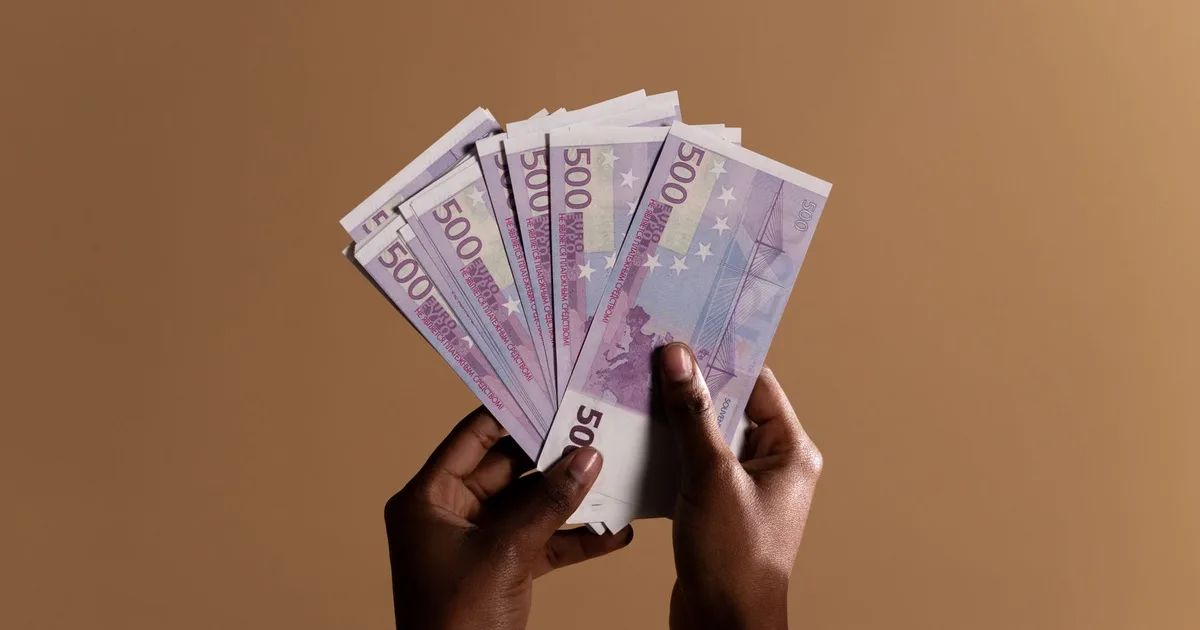

The minimum wage in Croatia for 2027 will be at least 1,050 euros gross, the same as in 2026. The law does not allow it to fall below the previous year's level, and the government must set it by regulation by 31 October 2026. As of 8 October the amount has not been published, but Finance Minister Tomislav Ćorić has announced another increase. The net minimum wage in 2026 in Zagreb is 799.24 euros.
This guide is for workers who want to know what will land in their account and for employers planning next year's costs. We cover seven things you need to know about the minimum wage, from the amount and net pay calculation to what may not be counted towards it and how far Croatia is from the rest of the EU. As soon as the government publishes the 2027 regulation, we will update the figures.
Minimum wage 2027 - quick overview
| # | What | Amount or rule | Source |
|---|---|---|---|
| 1 | Minimum wage 2027 | at least 1,050 EUR gross, decision by 31 Oct 2026 | Minimum Wage Act |
| 2 | Net in 2026 (Zagreb) | 799.24 EUR | calculation per Tax Administration rules |
| 3 | Who sets it | government regulation, on the labour minister's proposal | Act, Art. 6 |
| 4 | Not counted | overtime, night, Sunday and holiday bonuses | Act |
| 5 | Growth since 2016 | from 414 to 1,050 EUR gross | government, Official Gazette |
| 6 | EU ranking | 13th of 22 countries | Eurostat, January 2026 |
| 7 | Employer fine | 7,960 to 13,270 EUR | Act |
Details on each item follow below.
1. Minimum wage 2027: at least 1,050 euros gross
 Photo: Jakub Zerdzicki, Pexels
In 2026 it is 1,050 euros gross, under the Regulation on the minimum wage for 2026 from October 2025. That is 80 euros, or 8.25 percent, more than in 2025. The 2027 regulation has not yet been adopted, and under the Minimum Wage Act the new amount cannot be lower than the current one.
On 2 October 2026, Ćorić announced that it will rise again because inflation is above 4 percent, reports Index. The government also has a long-term target of 1,250 euros gross by 2028, announced in December 2025, according to Index. We will know the exact 2027 figure by the end of October.
| Detail | Value |
|---|---|
| Minimum wage 2026 | 1,050.00 EUR gross |
| Minimum wage 2027 | at least 1,050 EUR, amount not yet published |
| Regulation deadline | 31 October 2026 |
| Government announcement | increase due to inflation above 4% |
| Target by 2028 | 1,250 EUR gross |
Pros: the law guarantees the minimum wage cannot fall, the government has publicly announced a new rise
Cons: the exact 2027 amount is only known at the end of October, so employers budget blind
Our opinion: If you are an employer, plan for 2027 with at least a rise similar to last year's. Reaching the 1,250-euro target in 2028 still needs another 200 euros, so around 100 euros a year on average is realistic.
2. Net minimum wage: 799 euros in Zagreb
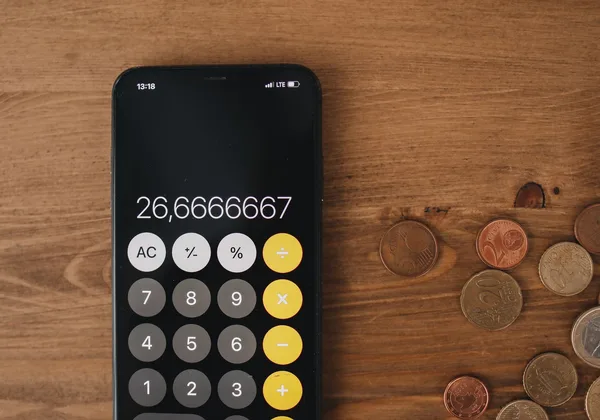 Photo: Polina Tankilevitch, Pexels
From 1,050 euros gross, a worker in Zagreb with no children or dependants takes home 799.24 euros net. Lower salaries benefit from a relief on first-pillar pension contributions, in force since December 2023: for gross pay between 700 and 1,300 euros, the contribution base is reduced by half the difference up to 1,300 euros. At 1,050 euros gross that is 125 euros, so the worker pays less in contributions.
Income tax is only paid on the part above the 600-euro personal allowance, so the tax at this level is small. Net pay also depends on where you live: in Split it is 803.12 euros, and in Rijeka, Osijek and Zadar 807 euros, according to Fiskai.hr. The same worker costs the employer 1,223.25 euros, because the employer pays another 16.5 percent health insurance contribution on top of gross pay.
| Calculation step (Zagreb, 2026) | EUR |
|---|---|
| Gross salary | 1,050.00 |
| Pension pillar I: 15% of 925 (reduced base) | -138.75 |
| Pension pillar II: 5% of 1,050 | -52.50 |
| Income | 858.75 |
| Personal allowance | -600.00 |
| Income tax (23% of 258.75) | -59.51 |
| Net salary | 799.24 |
| Employer cost (gross + 16.5%) | 1,223.25 |
Pros: the contribution relief raises net pay, the personal allowance almost cancels out the tax
Cons: net pay depends on the city, and for the employer every euro of gross means another 16.5 cents of cost
Our opinion: When comparing job offers, ask for the gross figure and check the net in a calculator for your city. The difference between Zagreb and Rijeka is almost 8 euros a month.
3. Who sets the minimum wage and by what rules
 Photo: Croativ, Wikimedia Commons (CC BY-SA 4.0)
The government sets the amount by regulation, on the proposal of the labour minister, currently Alen Ružić. Before the proposal, the minister consults unions and employers, usually in September and October. The regulation must be adopted by 31 October for the following year, under the Minimum Wage Act.
You often hear that it must be at least half of the average wage, but this is not a binding rule in Croatian law. It is a reference value from EU Directive 2022/2041 (50 percent of the average or 60 percent of the median gross wage), which the minister must take into account. According to the Croatian Bureau of Statistics, the average gross wage in July 2026 was 2,164 euros, with net at 1,540 euros, so the 1,050-euro minimum is about 48.5 percent of the average.
| Detail | Value |
|---|---|
| Who decides | Croatian government by regulation |
| Who proposes | labour minister, after consulting social partners |
| Deadline | 31 October for the following year |
| Reference value | 50% of average or 60% of median gross wage (EU Directive) |
| Average gross wage (July 2026) | 2,164 EUR |
| Minimum wage vs average | about 48.5% |
Pros: the amount is set every year, so it tracks inflation and wage growth
Cons: the reference value is not binding, so the final amount depends on a political decision
Our opinion: If you are a worker, follow the union consultations in September and October. That is when your pay for next year is really decided.
4. What may not be counted towards the minimum wage
 Photo: Nafi's Eye, Pexels
It is the lowest gross amount for full-time work, and the employer may not "top it up" with bonuses. Under the Minimum Wage Act, extra pay for overtime, difficult working conditions, night work and work on Sundays and public holidays does not count towards the minimum wage. That means a worker on nights, Sundays or public holidays must get 1,050 euros plus those bonuses.
The Act covers all workers in Croatia. The exception is people who are the sole employee of a company while also being a board member, director, cooperative manager or liquidator. If you work part-time, it is paid in proportion to your contracted working hours.
| Not counted towards the minimum wage | Example |
|---|---|
| Overtime | hours above full-time |
| Difficult working conditions | work at height, in noise, in the cold |
| Night work | work between 10 pm and 6 am |
| Sunday work | Sunday bonus |
| Public holiday work | holiday bonus |
Pros: workers on nights, Sundays or public holidays receive bonuses on top of the minimum wage
Cons: some workers do not know this rule, so they do not notice when an employer cuts their bonuses
Our opinion: Check your payslip. If your base pay is below the minimum wage and night or Sunday bonuses "cover" the difference, your employer is breaking the law.
5. How the minimum wage has grown since 2016
 Photo: Monstera Production, Pexels
In ten years, Croatia's statutory minimum has more than doubled: from 414 euros gross in 2016 to 1,050 euros in 2026, a rise of about 153 percent. The biggest jumps came after the euro was introduced. In 2024 it rose by 140 euros, in 2025 by 130 and in 2026 by 80 euros, according to the regulations in the Official Gazette.
The number of workers paid less than required has also fallen, which the labour ministry attributes to inspections and prevention. According to data reported by tportal, the number of workers paid below the minimum fell from 15,993 to 5,164, and about 74,000 workers, roughly 6 percent of employees, receive the minimum wage.
| Year | Gross | Increase | Official Gazette |
|---|---|---|---|
| 2016 | 414 EUR | - | Croatian government |
| 2023 | 700 EUR | - | NN 122/2022 |
| 2024 | 840 EUR | +140 EUR | NN 125/2023 |
| 2025 | 970 EUR | +130 EUR | NN 124/2024 |
| 2026 | 1,050 EUR | +80 EUR | NN 132/2025 |
| 2027 | at least 1,050 EUR | awaiting regulation | - |
Pros: rapid growth in recent years, fewer workers below the legal minimum
Cons: the 2026 rise was smaller than in previous years, and inflation ate part of it
Our opinion: For your household budget, expect it to keep rising, but no longer in jumps of 130 to 140 euros. For how to split your pay, see our guide on how to budget your money.
6. Croatia compared with the EU: 13th of 22 countries
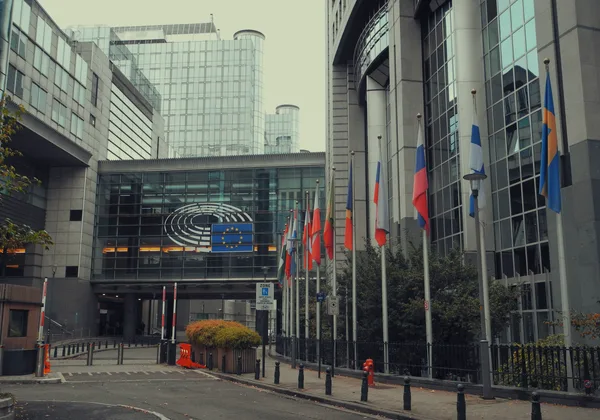 Photo: Leonardo Barucci, Pexels
According to Eurostat, of the 22 EU members with a statutory minimum wage, Croatia ranked 13th on 1 January 2026. It is behind Portugal and Poland, just ahead of Greece and well ahead of Czechia, Slovakia and Hungary. Luxembourg has the highest at 2,704 euros, and Bulgaria the lowest at 620 euros.
Austria, Italy, Denmark, Finland and Sweden have no statutory minimum wage; the lowest wages are set by collective agreements. When comparing, keep prices in mind too: countries with higher minimum wages also have higher living costs.
| Country | Minimum wage (1 Jan 2026) |
|---|---|
| Luxembourg | 2,704 EUR |
| Germany | 2,343 EUR |
| Poland | 1,139 EUR |
| Croatia | 1,050 EUR |
| Greece | 1,027 EUR |
| Czechia | 924 EUR |
| Slovakia | 915 EUR |
| Hungary | 838 EUR |
| Bulgaria | 620 EUR |
Pros: Croatia is ahead of most newer member states from central and eastern Europe
Cons: the gap to Germany and the western EU is still more than twofold
Our opinion: A comparison in euros does not tell the whole story. For the real picture, look at what it buys in each country, as rent and food in Munich and Zagreb are two different worlds.
7. Workers' rights and employer fines
 Photo: Mikhail Nilov, Pexels
An employer who pays a worker less than the minimum wage commits an offence. Under the Minimum Wage Act, a legal-entity employer is fined 7,960 to 13,270 euros, and the responsible person in a legal entity or an individual employer 920 to 1,320 euros. Labour inspectors carry out supervision.
If you think your employer is paying you less than the minimum wage, first check your employment contract and payslip: the gross amount for full-time work, without bonuses, may not be below 1,050 euros. You can report it to the labour inspection of the State Inspectorate and also claim the difference in court.
| Offence | Fine |
|---|---|
| Legal-entity employer | 7,960 to 13,270 EUR |
| Responsible person in a legal entity | 920 to 1,320 EUR |
| Individual employer | 920 to 1,320 EUR |
| Supervision | labour inspectors |
Pros: high fines deter employers, reporting to the inspectorate costs nothing
Cons: some workers do not report violations for fear of losing their job
Our opinion: Keep your payslips. If you ever have to prove you were paid below the minimum wage, they are your most important evidence.
Conclusion: what the 2027 minimum wage means for you
| If you are | What you need to know |
|---|---|
| A worker on the minimum wage | in 2027 at least 1,050 EUR gross, probably more, net about 800 EUR or more |
| A worker on night, Sunday or holiday shifts | bonuses come on top, not inside it |
| An employer | a minimum-wage worker costs 1,223.25 EUR in 2026, expect a rise in 2027 |
| A student | the lowest hourly rate for student work in 2026 is 6.56 EUR |
The 2027 amount will not be lower than 1,050 euros gross, and judging by government announcements it will be higher. We will know the exact amount by 31 October 2026, when we will update this guide. Until then, use the table in section two to calculate net pay, and for tax reliefs see our tax refund tips.
Frequently asked questions
What is the minimum wage in Croatia in 2027?
The 2027 minimum wage regulation has not yet been adopted; the government must adopt it by 31 October 2026. By law, the amount cannot be lower than 1,050 euros gross, the 2026 level. The government has announced an increase, and the long-term target is 1,250 euros gross by 2028.
What is the net minimum wage?
In 2026, the 1,050-euro gross minimum wage is 799.24 euros net in Zagreb for a worker with no children. In Split it is 803.12 euros, and in Rijeka, Osijek and Zadar 807 euros, because local income tax rates differ.
Do night and Sunday bonuses count towards the minimum wage?
No. Under the Minimum Wage Act, extra pay for overtime, difficult conditions, night work and work on Sundays and public holidays does not count towards it. These bonuses must be paid on top of it.
How much does a minimum-wage worker cost the employer?
In 2026, a minimum-wage worker costs the employer 1,223.25 euros a month: 1,050 euros gross pay plus a 16.5 percent health insurance contribution of 173.25 euros.
How many workers earn the minimum wage?
According to labour ministry data from July 2026, about 74,000 workers receive the minimum wage, roughly 6 percent of employees. The number of workers paid below the minimum fell from 15,993 to 5,164.
How we researched
We took the amounts from the minimum wage regulations in the Official Gazette and from the Minimum Wage Act, the average wage from the Croatian Bureau of Statistics, and the EU comparison from Eurostat. We calculated net pay according to Tax Administration rules and checked it against the Fiskai.hr calculator. Announcements for 2027 come from media reports of government statements. Information is as of 8 October 2026. This guide is not legal or tax advice for your specific case.
Sources
- Official Gazette - Regulation on the minimum wage for 2026
- Minimum Wage Act (zakon.hr)
- Croatian government - minimum wage 1,050 euros with compensation measures
- Croatian Bureau of Statistics - average wage July 2026
- Eurostat - EU minimum wages, January 2026
- Fiskai.hr - minimum wage and contributions
- Index - Ćorić announces new minimum wage rise
Related articles:
- Top 7 Tax Refund Tips for Croatia 2026
- Top 7 Lump-Sum Business Obligations in Croatia 2026
- Top 7 Things Banks Check About Your Credit Score in Croatia
- How to Best Budget Your Money for Life
- Christmas Bonus and Child Gift 2026: How Much Is Tax-Free in Croatia
Cover photo: cottonbro studio, Pexels