
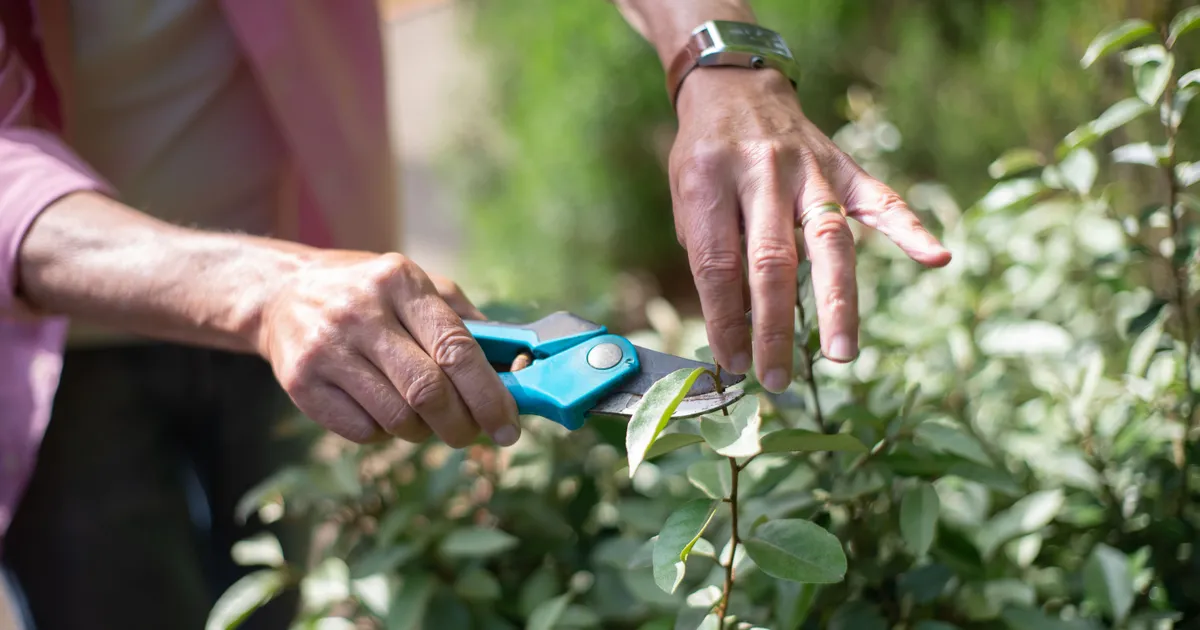

The secateurs in this comparison cost between 15.86 euros for the Fiskars Plus P521 and 74.94 euros for the battery-assisted Gardena AssistCut on Amazon.de. This guide is for anyone pruning fruit trees, roses, shrubs and vines who wants secateurs that cut cleanly instead of crushing the branch. The best secateurs 2027 are the Felco 2 as the classic Swiss secateur with spare parts for everything (49.99 euros), the Fiskars X-series PowerGear P921 with a gear mechanism and rotating handle (30.70 euros) and the Original Löwe 1.104 as an anvil secateur for dead wood (39.91 euros). We compared seven models with live prices from 15 November 2026.
Start by deciding what you cut: green branches or dead wood. That determines whether you need bypass or anvil secateurs.
Quick overview: the best secateurs 2027
All the secateurs in this comparison are available on Amazon.de. Click a name to see the current price.
| Model | Type | Max cut | Length | Feature | Price | Best for |
|---|---|---|---|---|---|---|
| Felco 2 | bypass | 25 mm | 215 mm | spare parts | 49.99 € | Orchards, long life |
| Fiskars P921 | bypass, geared | 24 mm | 201 mm | rotating handle | 30.70 € | Smaller hands, many cuts |
| Löwe 1.104 | anvil | 22 mm | 210 mm | both hands | 39.91 € | Dead wood |
| Felco 9 | bypass | 25 mm | 210 mm | left-handed | 46.50 € | Left-handers |
| Fiskars P521 | bypass | 24 mm | 201 mm | 184 g | 15.86 € | Tightest budget |
| Fiskars LX98 | lopper, geared | 50 mm | 80 cm | long handles | 64.99 € | Thicker branches |
| Gardena AssistCut | bypass, battery | 25 mm | - | up to 5x force | 74.94 € | Weaker hands |
Data for Löwe and Gardena comes from the manufacturers, and for Felco and Fiskars from the Amazon listing because we couldn't open their websites. The maximum cut is the manufacturer's figure and is often smaller in practice.
How to choose secateurs
Bypass or anvil
Bypass secateurs have two curved blades that slide past each other like scissors. Anvil secateurs have one blade that cuts onto a flat surface. According to Iowa State University, bypass secateurs are generally preferred because they cut cleanly and close, while anvil secateurs are good on dead branches and jam less often but can crush the stem (Iowa State). A preliminary 2025 field study from the University of Florida found that anvils crush more tissue while bypass blades leave slightly torn bark on one side, with similar overall damage (UF/IFAS). For green branches and roses get bypass, for dead wood an anvil.
How thick a branch can I cut
Manufacturers quote 22 to 25 mm for hand secateurs. According to Iowa State, hand secateurs are generally used up to about 19 mm, loppers from about 19 to 38 mm, and a saw for branches thicker than about 44 mm. Swiss consumer programme Kassensturz tested ten bypass secateurs in 2025, and several didn't reach their claimed 25 mm on living wood (Kassensturz). For thicker branches, use loppers or a pole saw.
Gears, ratchets and batteries
According to the University of Nebraska, loppers come with ratchet, geared or compound mechanisms: a ratchet cuts in several squeezes and holds the blades on the branch in between, and a compound lever amplifies the force (UNL). Gears and ratchets work the same way on hand secateurs, which helps weaker hands most. Battery-assisted secateurs such as the Gardena AssistCut add power only when they sense the branch resisting.
Hand size and left-handers
Secateurs need to fit your hand. Löwe offers three handle shapes, including a rotating handle that reduces finger friction (Löwe). Left-handers need dedicated secateurs such as the Felco 9 or a model the maker lists as suitable for both hands.
Sharpening and care
The RHS advises cleaning the blade before sharpening, sharpening only the bevelled side, never the flat side, and putting a few drops of oil on the pivot and spring after reassembly (RHS). Felco, Fiskars and Löwe sell replacement blades, so good secateurs can be used for years.
Disinfection
Clean soil and sap off before disinfecting. Iowa State recommends undiluted ethanol or 70% isopropyl alcohol, but for tools used on apples with fire blight it advises a 10% bleach solution: soak the blades for at least 10 minutes, then rinse (Iowa State).
When to prune
The RHS recommends pruning roses in late winter, in February or March, cutting no more than 5 mm above a bud (RHS). Apples and pears are pruned in winter, between leaf fall and bud burst, usually November to early March, and plums in early spring or mid-summer because of silver leaf disease (RHS). In Croatia, according to the agricultural agency HAPIH, apples and pears can be pruned throughout February, and peaches and apricots carefully and only in stable weather. The advisory service adds that in the Kvarner region you should avoid days with strong bora wind or frost (Novi list). You can shred the prunings with a garden shredder and add them to a composter.
Secateur tests
Stiftung Warentest tested 31 secateurs and loppers in 2015, and a 45-euro Original Löwe anvil secateur won, though the press release doesn't name the model (Stiftung Warentest). In Kassensturz's 2025 test of ten bypass secateurs, the cheap Hornbach own brand For Q won, the Felco came second with "gut", and the Fiskars and Gardena models were rated "ungenügend". That test doesn't name exact models either, so we can't attribute the grades to the secateurs in this comparison. Which?'s guide (updated November 2026) lists 29 tested secateurs, including the Felco 2, but the results are for subscribers only (Which?).
1. Felco 2
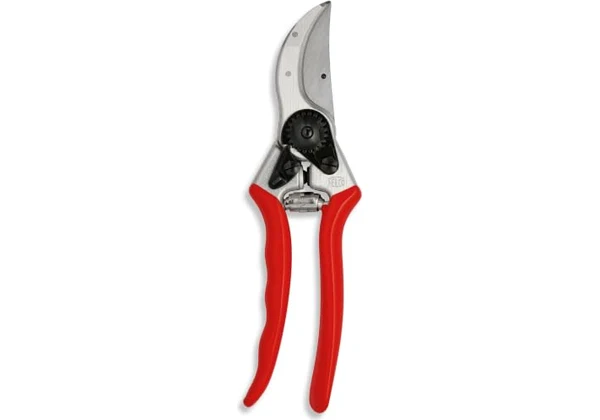 Photo: Felco, Amazon
The Felco 2 is a Swiss bypass secateur for right-handers with medium to large hands. It cuts branches up to 25 mm, is 215 mm long, has forged aluminium handles with a rubber shock absorber, and the counter-blade has a sap groove. The blade can be finely adjusted, and a replacement blade and spring are sold separately. The data is from the Amazon listing (Amazon).
These are secateurs where almost every part can be replaced. In the Kassensturz test, a Felco (model not named) got "gut" but didn't cut the claimed 25 mm on living wood.
| Feature | Detail |
|---|---|
| Type | bypass, right-handed |
| Max cut | 25 mm |
| Length | 215 mm |
| Handles | forged aluminium |
| Hand size | medium to large |
| Spare parts | blade, spring and more |
| Price | 49.99 € |
Pros: all parts replaceable, sturdy aluminium handles, fine blade adjustment.
Cons: right-handed only, pricier than Fiskars, no rotating handle.
Our opinion: For an orchard or vineyard, these are the secateurs we'd buy. When the blade wears out, replace it instead of buying new secateurs.
2. Fiskars X-series PowerGear P921
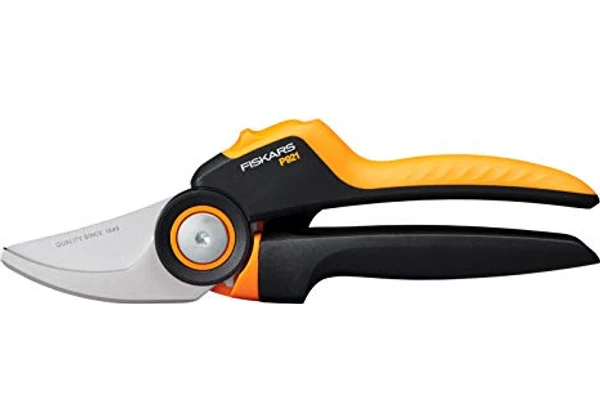 Photo: Fiskars, Amazon
The Fiskars P921 is a bypass secateur with the PowerGear mechanism and a rotating handle for small to medium hands. It cuts up to 24 mm, is 201 mm long and weighs 220 g. The blade has a non-stick coating and is replaceable, and the handles are glass-fibre reinforced plastic. Fiskars lists it for fresh wood, and the Amazon listing mentions a 25-year warranty (Amazon).
The rotating handle and gear save your hand when you're cutting hundreds of twigs, but the rotating handle takes getting used to. It's not for dead wood.
| Feature | Detail |
|---|---|
| Type | bypass, PowerGear |
| Max cut | 24 mm |
| Length | 201 mm |
| Weight | 220 g |
| Handle | rotating |
| Blade | replaceable, coated |
| Price | 30.70 € |
Pros: gear saves effort, rotating handle, replaceable blade, light.
Cons: fresh wood only, plastic handles, rotating handle takes practice.
Our opinion: If you cut a lot and your hand tires quickly, these secateurs are a good compromise between price and comfort.
3. Original Löwe 1.104
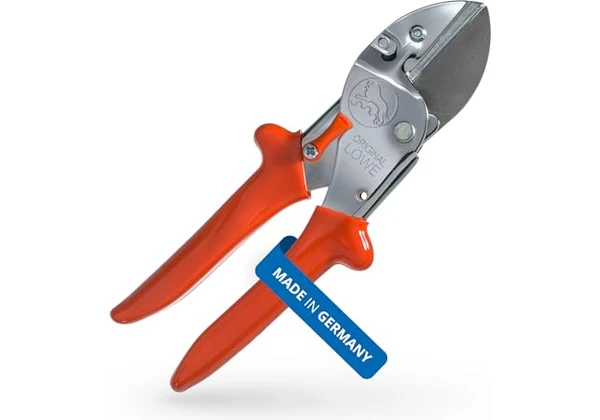 Photo: Löwe, Amazon
The Original Löwe 1.104 is a German anvil secateur: the blade makes a pulling cut onto a fixed anvil. It cuts up to 22 mm, is 210 mm long, weighs about 290 g, and the body is chrome-plated steel. The manufacturer lists it for M to L hands and for both hands, and sells nine spare parts for it, including the blade (Löwe).
For dead branches and hard wood, an anvil cuts more easily than a bypass. It's not ideal for soft young shoots, which it can crush.
| Feature | Detail |
|---|---|
| Type | anvil |
| Max cut | 22 mm |
| Length | 210 mm |
| Weight | approx. 290 g |
| Hand | left and right |
| Made in | Germany |
| Price | 39.91 € |
Pros: cuts dead wood easily, both hands, spare parts, German-made.
Cons: only 22 mm, crushes soft shoots, plastic grip covers.
Our opinion: As a second pair alongside a bypass, for dead branches and clearing shrubs, the Löwe is an excellent choice.
4. Felco 9
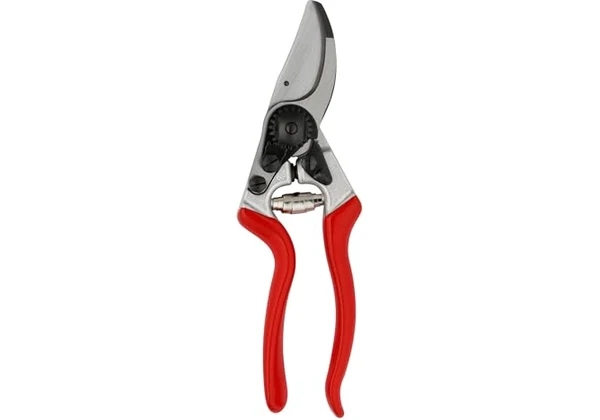 Photo: Felco, Amazon
The Felco 9 is a bypass secateur for left-handers with large hands. It cuts up to 25 mm, is 210 mm long, has an angled cutting head and forged aluminium handles with rubber shock absorbers. The blade is replaceable. The data is from the Amazon listing (Amazon).
Right-handed secateurs are often uncomfortable for left-handers. For medium hands, Felco also makes the left-handed model 16 (up to 20 mm).
| Feature | Detail |
|---|---|
| Type | bypass, left-handed |
| Max cut | 25 mm |
| Length | 210 mm |
| Head | angled |
| Hand size | large |
| Blade | replaceable |
| Price | 46.50 € |
Pros: true left-handed secateurs, forged aluminium, replaceable parts.
Cons: large hands only, price.
Our opinion: If you're left-handed and prune every year, these are the secateurs we'd buy you.
5. Fiskars Plus P521
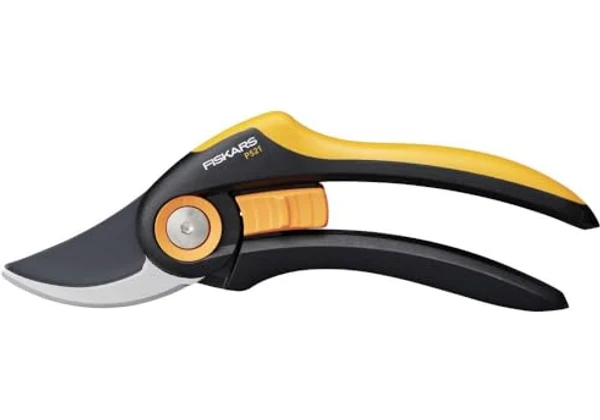 Photo: Fiskars, Amazon
The Fiskars Plus P521 is a simple bypass secateur without gearing. It cuts up to 24 mm, is 201 mm long and weighs just 184 g. The hardened steel blade has a non-stick coating, and the Amazon listing says it suits right- and left-handers (Amazon).
For occasional pruning of roses and shrubs, you don't need more. The listing mentions only resharpening, not a replacement blade.
| Feature | Detail |
|---|---|
| Type | bypass |
| Max cut | 24 mm |
| Length | 201 mm |
| Weight | 184 g |
| Hand | left and right |
| Blade | coated |
| Price | 15.86 € |
Pros: lowest price, light, both hands.
Cons: no gearing, fresh wood only, simpler build.
Our opinion: For a balcony, roses and occasional pruning, this is the cheapest good choice.
6. Fiskars PowerGear X LX98
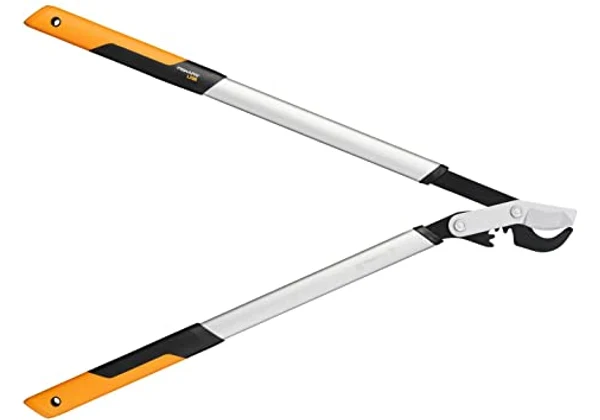 Photo: Fiskars, Amazon
The Fiskars PowerGear X LX98 is a two-handed bypass lopper with a gear mechanism. It cuts up to 50 mm, is 80 cm long, weighs 1.3 kg and has aluminium arms. The stainless steel blade has a non-stick coating and can be replaced. The listing says it suits right- and left-handers and is meant for fresh wood; for dead wood Fiskars offers the LX99 anvil model (Amazon).
Where hand secateurs give up, a lopper cuts without a saw. Overhead, 1.3 kg quickly tires your arms.
| Feature | Detail |
|---|---|
| Type | lopper, bypass, geared |
| Max cut | 50 mm |
| Length | 80 cm |
| Weight | 1.3 kg |
| Arms | aluminium |
| Blade | replaceable |
| Price | 64.99 € |
Pros: cuts up to 50 mm, gearing, light aluminium arms.
Cons: fresh wood only, heavy overhead, priciest manual tool in the comparison.
Our opinion: Alongside hand secateurs, this is the second tool we'd get for an orchard, for branches hand secateurs can't handle.
7. Gardena AssistCut
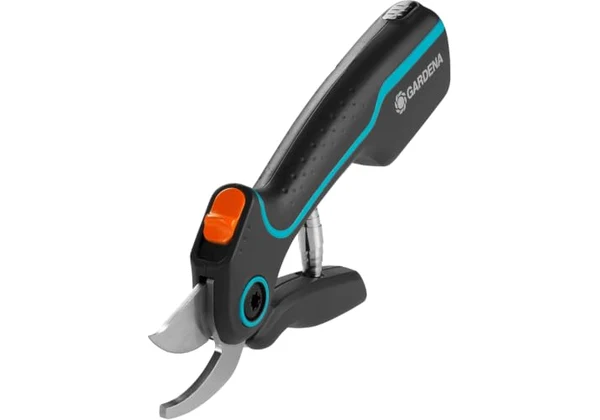 Photo: Gardena, Amazon
The Gardena AssistCut is a bypass secateur with a built-in battery. A sensor detects when the branch resists and adds up to five times more force, and with the assist switched off it works as a normal secateur. It cuts up to 25 mm, manages up to 1,400 assisted cuts per charge and charges via USB-C in 100 minutes. The blade is precision-ground stainless steel, and Gardena gives a 3-year warranty with registration (Gardena).
For older gardeners and anyone whose hand aches quickly, battery assistance can make pruning much easier. On Amazon it's currently sold by a third-party seller, and the weight isn't published.
| Feature | Detail |
|---|---|
| Type | bypass, battery-assisted |
| Max cut | 25 mm |
| Assist | up to 5x force |
| Cuts per charge | up to 1,400 |
| Charging | USB-C, 100 min |
| Warranty | 3 years with registration |
| Price | 74.94 € |
Pros: battery helps only when needed, works without it, USB-C charging.
Cons: most expensive, same max cut as manual secateurs, weight not given.
Our opinion: If your hand can no longer handle an hour of pruning, these secateurs are worth considering, even at the higher price.
Conclusion: which secateurs to choose?
Choose secateurs by the wood and your hand. For orchards and a long life, the Felco 2 is best, for comfortable work with many cuts the Fiskars P921, and for dead wood the Löwe 1.104. Left-handers should get the Felco 9, and if your hand hurts, the Gardena AssistCut.
| If you need... | Get | Price |
|---|---|---|
| Secateurs for life | Felco 2 | 49.99 € |
| Less effort per cut | Fiskars P921 | 30.70 € |
| Secateurs for dead wood | Löwe 1.104 | 39.91 € |
| Left-handed secateurs | Felco 9 | 46.50 € |
| The tightest budget | Fiskars P521 | 15.86 € |
| Branches up to 50 mm | Fiskars LX98 | 64.99 € |
| Battery assistance | Gardena AssistCut | 74.94 € |
For hedges, use hedge trimmers, and for branches high in the crown, a pole saw.
Frequently asked questions
Which is better: bypass or anvil?
For green branches, roses and fruit trees, bypass secateurs are better because they cut cleanly and close. Anvil secateurs cut dead and hard wood more easily and jam less often, but can crush soft shoots. Many gardeners own both.
How thick a branch can hand secateurs cut?
Manufacturers quote 22 to 25 mm, but according to Iowa State hand secateurs are generally used up to about 19 mm. For branches of about 19 to 38 mm use loppers, and a saw for thicker ones. In the Kassensturz test, several secateurs didn't reach their claimed diameter on living wood.
Are there secateurs for left-handers?
Yes. The Felco 9 and Felco 16 are made for left-handers, and some secateurs, like the Löwe 1.104 and Fiskars P521, are listed by the maker or seller as suitable for both hands.
How do you sharpen secateurs?
Clean the blade, sharpen only the bevelled side with a whetstone or diamond file, never the flat side, then remove the burr by running the sharpener flat across. Finally put a few drops of oil on the pivot and spring. That's the RHS's advice.
Do secateurs need disinfecting?
Yes, especially when moving from a diseased plant to a healthy one. Clean off sap and soil, then wipe the blades with 70% alcohol. For apples with fire blight, Iowa State recommends 10% bleach, a 10-minute soak and a rinse.
Are cordless secateurs worth it?
If you have a large orchard or a sore hand, yes. Battery-assisted secateurs reduce effort but cut the same thickness as good manual ones. For a few roses and shrubs, manual secateurs are enough.
When should fruit trees and roses be pruned?
Apples and pears are pruned while dormant, in Croatia per HAPIH throughout February. Roses in February or March, and plums in early spring or summer. Prune peaches and apricots only in stable weather, without frost or bora wind.
How we chose
We chose the secateurs in this comparison by cutting type, maximum diameter, ergonomics, spare parts, price and availability on Amazon.de. We considered more than ten models and left out the Gardena SmartCut, which is sold on Amazon.de as an import offer with conflicting data, and the Bosch EasyPrune, which wasn't available. We checked every ASIN through the Amazon API. Specifications come from the manufacturers for Löwe and Gardena, and from the Amazon listing for Felco and Fiskars. Prices are live Amazon.de prices as of 15 November 2026. We did not test the secateurs ourselves.
Sources
- Iowa State University - pruning equipment
- Iowa State University - sanitizing pruning shears
- University of Nebraska - basics of pruning tools
- UF/IFAS - anvil vs bypass pruners
- RHS - sharpening tools
- RHS - rose pruning guide
- RHS - winter pruning of apples
- Novi list - fruit tree pruning
- Löwe - handle shapes
- Löwe - Original Löwe 1
- Gardena - AssistCut
- Stiftung Warentest - garden shears test 2015
- Kassensturz - garden shears test 2025
- Which? - best secateurs
Related articles: