
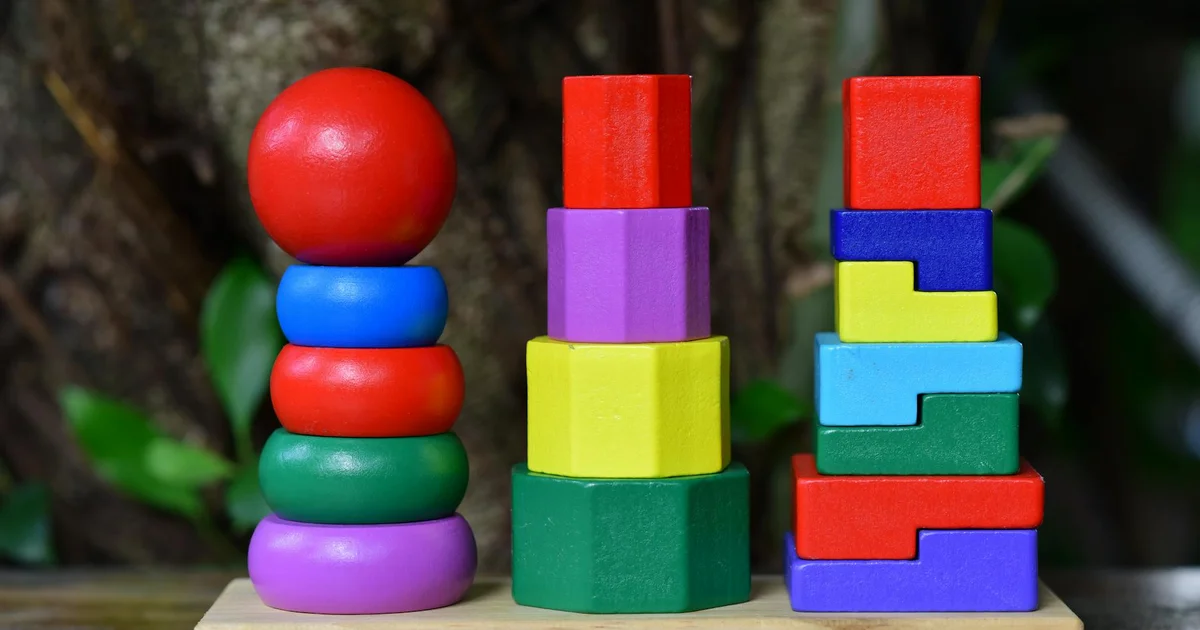

A child's brain develops more than one million new neural connections per second in the first few years of life - which is an impressive number, and also a responsibility for parents choosing toys. We selected 7 toys that stimulate brain development and are available in Europe in 2026, covering all age groups from newborns to school-age children, with prices from 6.91 to 59.99 EUR.
Quick overview
| Rank | Toy | Age group | Price | Best for |
|---|---|---|---|---|
| 1 | MAGNA-TILES Classic 32 pcs | 3-7 years | 59.99 EUR | Spatial thinking and STEM |
| 2 | ThinkFun Rush Hour | 8-12 years | 20.14 EUR | Logic and problem-solving |
| 3 | LEGO Classic 11013 (500 pcs) | 4-12 years | 30.52 EUR | Creativity and fine motor skills |
| 4 | Ravensburger Puzzle 2x12 | 3-5 years | 6.91 EUR | First cognitive play |
| 5 | Little Dutch Activity Cube | 0-18 mo. | 17.05 EUR | Sensory development for babies |
| 6 | Geomag Special Edition 60 pcs | 5-10 years | 19.49 EUR | STEM and geometry |
| 7 | BRIO My First Railway | 18 mo. - 4 yr. | 40.32 EUR | Symbolic play and motor skills |
1. MAGNA-TILES Classic 32-Piece Set - The Power of Spatial Thinking
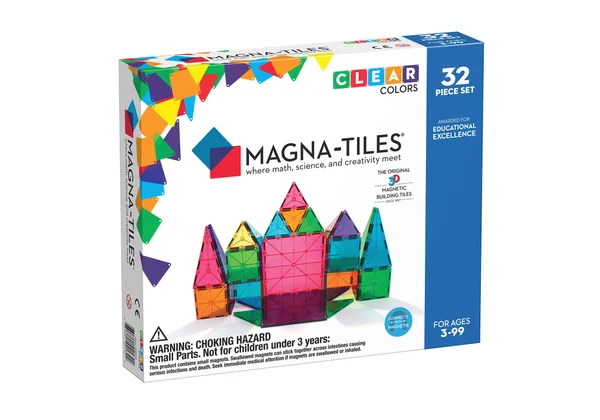 Photo: Magna-Tiles, BabyCenter HR
MAGNA-TILES Classic with 32 magnetic tiles works well because it's completely open - no instructions, no predefined goal, the child decides what to build. Every time a child plans where to place the next tile, they activate the prefrontal cortex responsible for planning and abstract thinking. This isn't marketing copy - it's why pediatricians and educators regularly recommend it.
The click of the magnets when tiles connect gives immediate feedback - the child instantly knows if the piece is in the right place. The set is STEAM certified and compatible with PicassoTiles sets, making it easy to expand for years.
| Specification | Detail |
|---|---|
| Age group | 3-7 years |
| Number of pieces | 32 tiles (squares and triangles) |
| Certifications | STEAM, EU safety standards |
| Material | ABS plastic with neodymium magnets |
| Compatibility | PicassoTiles, expandable sets |
| Price | 59.99 EUR |
Pros: Develops spatial thinking from age 3, multiply award-winning toy, expandable set that grows with the child
Cons: Higher price compared to cheaper imitations, smaller pieces require supervision for children under 3
Our opinion: Magna-Tiles is one of those toys that stimulate brain development and genuinely pays off - it stays with a child from age three to about ten, always offering a new challenge. If you want a gift kids will use for years with proven developmental value, this is our top pick. One note: make sure younger children are supervised, as the magnetic tiles are small objects.
2. ThinkFun Rush Hour - Logic Game for Young Minds
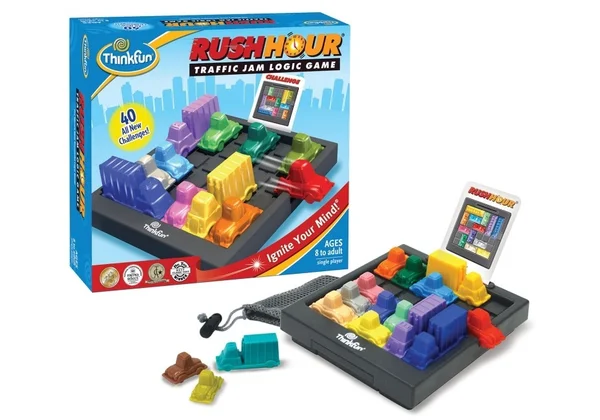 Photo: ThinkFun / Ravensburger, IgrackeSHOP
ThinkFun Rush Hour is a single-player logic puzzle where the child must get the red car out of a traffic jam by sliding other vehicles forward and backward - in only one direction. It sounds simple, but 40 challenges of increasing difficulty (from beginner to expert) mean the game stays interesting even as the child improves.
Each puzzle requires planning moves ahead and mentally visualizing results, which trains working memory. Rush Hour has over 20 international awards and is occasionally used in therapeutic programs for children with attention difficulties.
| Specification | Detail |
|---|---|
| Age group | 8-12 years |
| Number of challenges | 40 (4 difficulty levels) |
| Game format | Single-player |
| Awards | 20+ international awards |
| Units sold | 10+ million globally |
| Price | 20.14 EUR |
Pros: Over 10 million units sold - proven quality, grows with the child as the same set challenges advanced players, affordable for years of use
Cons: Suitable from age 8 only - younger children may get frustrated, single-player format doesn't develop social collaboration skills
Our opinion: Rush Hour is one of the best toys that stimulate brain development for older children who love puzzles. For parents who notice their child gives up on challenges too quickly or jumps between activities, this game is great training for focus and persistence. Start with the easiest challenges and gradually progress - don't give the hardest puzzles straight away.
3. LEGO Classic - Creative Transparent Bricks 11013
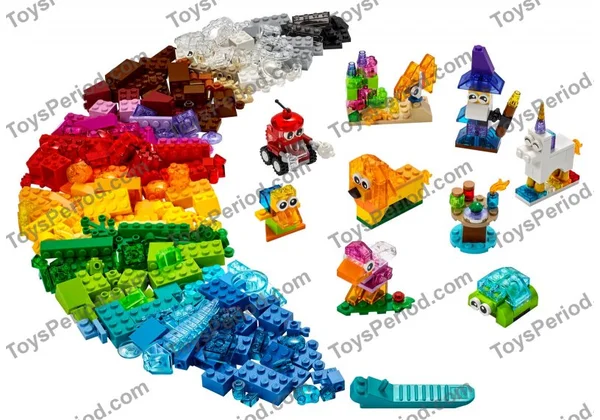 Photo: LEGO, BabyCenter HR
LEGO bricks have been among the leading toys that stimulate brain development for decades - and for good reason supported by research. Connecting and disassembling pieces precisely trains fine motor skills in the fingers, which is directly linked to the development of spoken and written language. The LEGO Classic 11013 set with 500 transparent pieces in 8 colors adds a visual dimension - children learn about colors, transparency and optics through play without realizing it.
What sets this apart from LEGO sets with predefined models is complete freedom - no instructions, no one correct answer. That kind of open creative play activates networks for divergent thinking - essentially training creative thinking without any guidance. According to NAEYC research, children who play with building blocks achieve better results in language development and mathematics.
| Specification | Detail |
|---|---|
| Age group | 4-12 years |
| Number of pieces | 500 transparent bricks |
| Colors | 8 different colors |
| Compatibility | All LEGO sets |
| Game format | Free building, for 1+ players |
| Price | 30.52 EUR |
Pros: Globally most recognized educational toy with decades of proven developmental benefits, affordable price for 500 pieces that last for years, grows with the child from age 4 to teenage years
Cons: Small pieces are not safe for children under 3, transparent bricks can be harder to find in a chaotic set
Our opinion: LEGO Classic is a safe choice that never disappoints - parents or children. The transparent bricks in this set are particularly interesting because they add visual play with light and colors. We recommend it as a birthday gift for children aged 4 to 10, especially for those who love building but aren't ready for complex LEGO Technic projects yet. A storage box helps too - 500 pieces can make quite a mess on the floor.
4. Ravensburger Puzzle 2x12 - Peppa Pig
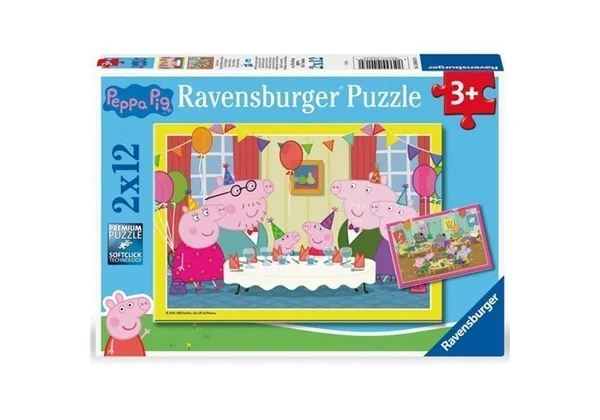 Photo: Ravensburger, RajzaIgracke HR
Puzzles are among the oldest toys that stimulate brain development in young children - and Ravensburger has been synonymous with top quality in this category for decades. The set with 2 puzzles of 12 pieces each (24 total in one box) is ideal for children just starting with logic games, offering two challenge levels - easier and harder - based on the child's abilities that day.
Precise cutting - Ravensburger's trademark - reduces frustration because pieces fit perfectly without forcing. Recognizing shapes, colors and spatial relationships while assembling puzzles directly trains the visual pathways of the brain and strengthens connections between the visual cortex and motor cortex. Popular characters like Peppa Pig motivate children to focus longer - which is itself cognitive training for children at an age when average attention spans are shorter than two minutes.
| Specification | Detail |
|---|---|
| Age group | 3-5 years |
| Number of puzzle sets | 2 separate puzzles |
| Pieces | 12 + 12 |
| Material | Thick cardboard, precision-cut |
| Theme | Peppa Pig |
| Price | 6.91 EUR |
Pros: World's most respected puzzle brand with consistent quality, excellent price for a first cognitive toy, available in European stores online and offline
Cons: Children grow out of it relatively quickly - ages 5+ need a more challenging set, cardboard pieces can be damaged if the child chews on them
Our opinion: For parents looking for a first logic toy for a 3-year-old, Ravensburger puzzle is a safe and solid choice - and at under 7 euros, there's no reason not to try it. When the child completes both puzzles in under 5 minutes without difficulty, that's a clear signal to move up to a 24-48 piece set. Ravensburger has a full range of difficulty levels, making it easy to track the child's progress.
5. Little Dutch Activity Cube Little Farm
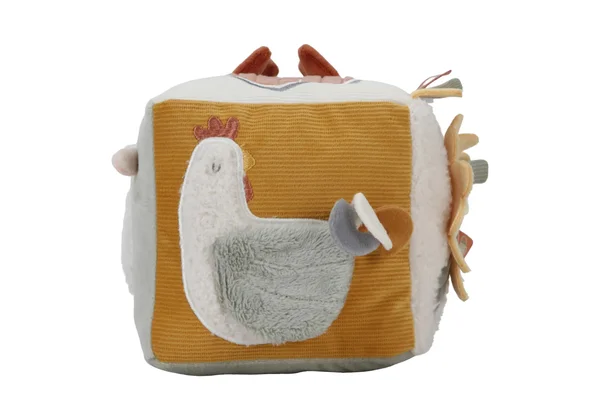 Photo: Little Dutch, Mae HR
For babies and infants, the first 18 months of life are the most intense period of neural plasticity - by age 3, a child develops up to 15,000 synapses per neuron, many more than an adult. During this period, every new sensory stimulus creates and strengthens synaptic connections that build the foundations of later development. Little Dutch Activity Cube is designed precisely for this critical period.
Each of the five sides of this soft cube offers a different activity and texture: crinkle materials, a small mirror for visual stimulation, moving elements, a rattle and contrasting farm motifs that attract the baby's attention. Grasping, squeezing and manipulating the cube trains fine motor skills in small fingers during the period when this stimulation is most effective. All materials are EU certified and machine washable, which is as practical for parents as it is safe for babies.
| Specification | Detail |
|---|---|
| Age group | 0-18 months |
| Activities | 5 sides, each with different stimulation |
| Material | Certified plush fabric, machine washable |
| Safety | EU standards, from 0 months |
| Size | Lightweight and portable |
| Price | 17.05 EUR |
Pros: Suitable from birth - ideal gift for newborns, multi-sensory stimulation supports neural development in the most critical period, machine washable materials for easy maintenance
Cons: Short window of use - children move on to more complex toys at 18 months, plush surface attracts dust and pet hair
Our opinion: This is one of the rare toys that stimulate brain development from day one. For a baby shower gift or a first toy for a newborn, the Little Dutch cube is an excellent choice combining safety, developmental value and an affordable price. One tip for parents: wash the cube in the washing machine regularly, especially during winter months.
6. Geomag Special Edition Magnetic Set - 60 Pieces
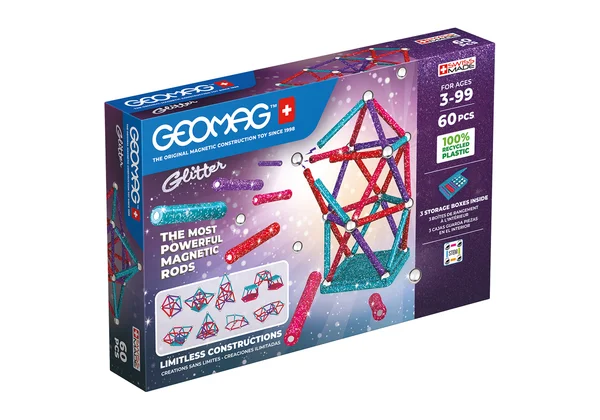 Photo: Geomag, IgrackeSHOP
Geomag, which counts among the classic toys that stimulate brain development through physics and geometry, invented the first magnetic construction toy with magnetic rods and metal balls in 1998. All products are still made in Switzerland to the original standards. The 60-piece set (rods and balls) connects physics, geometry and free constructive play.
Children discover the principles of magnetism (which rods attract, which repel), statics (how to make a stable tower), and geometry (which combinations form regular polyhedra) through play. Children reach conclusions on their own through play - that's more effective than explaining because the brain more easily retains what it discovers itself. Geomag is certified as a STEM toy and made from recycled plastic, making it an environmentally conscious choice.
| Specification | Detail |
|---|---|
| Age group | 5-10 years |
| Number of pieces | 60 (magnetic rods + metal balls) |
| Origin | Switzerland, since 1998 |
| Material | Recycled plastic, neodymium magnets |
| Certifications | STEM toy |
| Price | 19.49 EUR |
Pros: Original Swiss STEM toy with over 25 years of tradition, made from recycled plastic, affordable price for a set that encourages advanced cognitive skills
Cons: Magnetic rods and balls are not suitable for children under 5 due to swallowing risk, less visually attractive for children used to flat magnetic tiles
Our opinion: Geomag is a great next step for children who have "outgrown" Magna-Tiles and want a more complex constructive challenge - and still falls among toys that stimulate brain development, just at a higher level. We especially recommend it to children showing interest in natural sciences or mathematics - they won't immediately realize they're learning physics and geometry, which is exactly the charm of this toy. Make sure the child is 5 years old and doesn't have a habit of putting small objects in their mouth.
7. BRIO My First Railway Beginner Pack - Wooden Train Set
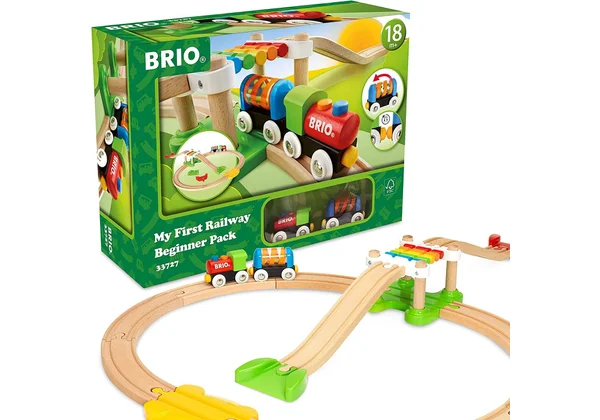 Photo: BRIO / Ravensburger, Playpolis
BRIO wooden railway is one of the toys that stimulate brain development through several different skills in a single activity. Planning the track layout activates spatial thinking and logic. Connecting wooden pieces trains fine motor skills and hand-eye coordination. And once the track is set up, symbolic play begins - the child drives trains, creates stories, names passengers and stations - which strongly develops language skills and narrative thinking.
BRIO uses FSC certified beech wood and every set is compatible with all other BRIO sets that have been on the market for decades. This means the railway can grow with the child - by adding new sections, bridges, stations and vehicles each year. Pushing the train develops gross motor skills of the arms and trunk, while precisely connecting short track sections requires fine motor skills.
| Specification | Detail |
|---|---|
| Age group | 18 mo. - 4 years |
| Material | FSC certified beech wood |
| Compatibility | All BRIO sets (since 1958) |
| Game format | Open play, free building |
| Developmental skills | Motor skills, symbolic play, narration |
| Price | 40.32 EUR |
Pros: Exceptional durability - the same BRIO set can be used by multiple generations of children, encourages symbolic play crucial for imagination and cognitive flexibility, safe with supervision from 18 months
Cons: Higher initial price compared to plastic alternatives, smaller track pieces may be an issue for children under 18 months
Our opinion: If you're looking for toys that stimulate brain development that last - and willing to invest around 40 euros in a toy that will last 5+ years with excellent resale value, this is the right choice. For children aged 18 to 36 months it's particularly valuable because it encourages symbolic play during the period when this type of play exponentially develops language and thinking.
Conclusion - Which Toys That Stimulate Brain Development to Choose?
| Situation | Recommended toy | Price |
|---|---|---|
| Gift for a newborn | Little Dutch Activity Cube | 17.05 EUR |
| First logic toy (ages 3-5) | Ravensburger Puzzle 2x12 | 6.91 EUR |
| Creative building (ages 4-12) | LEGO Classic 11013 | 30.52 EUR |
| STEM magnetic play (ages 3-7) | MAGNA-TILES Classic 32 | 59.99 EUR |
| Wooden railway for toddlers | BRIO My First Railway | 40.32 EUR |
| STEM for older children (5-10) | Geomag Special Edition 60 | 19.49 EUR |
| Logic game for school-age kids (8+) | ThinkFun Rush Hour | 20.14 EUR |
University of Toledo research reveals an important finding many parents don't know: children who play with fewer toys that stimulate brain development show twice the focus and more complex play with individual objects. This means it's better to have 5-7 quality brain-stimulating toys than 20 cheaper toys that get boring quickly. Consider rotation - don't make all toys available at once, but swap them every few weeks to keep them feeling "new".
Every toy on this list meets the same criterion: it must require active thinking, not just passive observation. Screens and electronic toys with ready-made answers provide stimulation, but don't develop the brain the same way as physical, constructive and symbolic play. The brain grows through challenge and self-discovery - the toys on this list deliver that without screens or ready-made answers.
Frequently asked questions
Which toys are best for a child's brain development?
There are many toys that stimulate brain development, but those showing the greatest impact are ones that simultaneously stimulate multiple senses and require active problem-solving. These are open-ended constructive toys like LEGO bricks and magnetic tiles, puzzles that develop visual perception, logic games like Rush Hour for older children, and sensory soft toys for babies. Research shows that simple, high-quality toys without too many distractions encourage longer focus and more complex play than expensive electronic alternatives.
At what age do toys most affect brain development?
The most intense period of neural plasticity is from birth to age 5, when the brain develops more than one million new synapses per second. During this period, sensory toys (0-18 mo.), constructive block play (1-4 yr.) and puzzles (3-5 yr.) have the deepest impact. The brain remains plastic throughout childhood, and logic and STEM toys for children aged 6-12 are equally important for prefrontal cortex development, which fully matures only in early adulthood.
Are LEGO bricks good for children's brain development?
Yes, LEGO bricks are among the most studied and effective educational toys. Connecting and disassembling pieces precisely develops fine motor skills directly linked to speech and writing development. Free building without instructions activates networks for creative and divergent thinking, while planning complex projects trains working memory and executive functions. LEGO is also used in therapeutic programs for children with developmental difficulties.
How do I choose an educational toy based on the child's age?
For babies (0-12 mo.) choose soft sensory toys with different textures and colors. For toddlers (1-3 yr.) wooden stacking sets and activity cubes are ideal. Preschoolers (3-6 yr.) thrive with magnetic builders and puzzles of 20-100 pieces. School-age children (6-12 yr.) need a real challenge - logic games, STEM sets and more complex building projects. The key rule: the toy should be challenging, but not so much that the child gives up.
How many toys does a child need for optimal development?
University of Toledo research shows a surprising finding: less is more. Children with 4 available toys show twice the focus and more complex play than those surrounded by 16 toys. Too many toys leads to cognitive overload and shallow attention. Expert recommendation: 5-8 toys available at once, with rotation every few weeks. Quality and developmental value matter more than quantity.
How we tested and selected
When selecting the 7 toys that stimulate brain development for this guide, we used a combination of expert research and practical criteria:
Developmental value - every toy must back up its brain development claims with peer-reviewed research. We consulted NAEYC (National Association for the Education of Young Children), First Things First and medical research from Lurie Children's Hospital.
Availability in the EU market - all toys are available in European online stores: babycenter.hr, igrackeshop.hr, rajzaigracke.hr, mae.hr and playpolis.com.
Brand reliability - we prioritized brands with long tradition and proven safety documentation (EU certifications, FSC for wood, STEAM certifications).
Age group coverage - we deliberately chose toys for all developmental stages from newborns to older school-age children to make the guide useful for as many parents as possible.
Price-to-value ratio - we cover a range from 6.91 EUR (Ravensburger puzzle) to 59.99 EUR (MAGNA-TILES), with emphasis on durability of investment.
Sources and references
- First Things First - Early Childhood Brain Development - statistics on neural development in the first years
- Lurie Children's Hospital - Brain Development and Health - synapse development in children under 3
- JCFS - Less is More: Toys and Cognitive Development - University of Toledo study on number of toys
- NAEYC - Impact of Specific Toys on Play - impact of building blocks on language and math development
- BabyCenter HR - MAGNA-TILES Classic Set - specifications and STEAM certification
- IgrackeSHOP - ThinkFun Rush Hour - specifications and awards
- BabyCenter HR - LEGO Classic 11013 - set details
Related articles
If you're interested in learning and development topics for children, check out our reviews of top 7 AI assistants for parents in 2026 that can help organize a child's schedule and learning, as well as top 7 online learning platforms for school-age children. For preschoolers starting to learn letters and numbers, our review of top 7 language learning apps is also worth a look.