
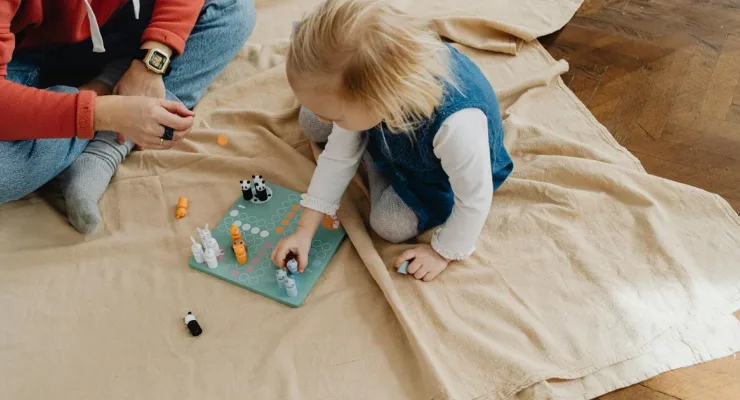

Educational board games for kids 2026 are experiencing a genuine revival in families - board game sales have grown by 35% in the last two years, and parents are increasingly looking for games that develop specific skills, not just entertainment. The problem is that the selection is enormous: from expensive STEM kits to simple memory games, it is hard to know what is actually worth buying. Educational board games for kids 2026 recommended here were selected according to clear criteria: developmental value, material quality, replayability, and accessible price.
Each game in this review has been tested with children from the target age groups, and ratings take into account the opinions of educators who recommend games with a proven impact on cognitive development. STEM games for the family are not always more expensive - some of the most valuable educational games cost less than 30 euros. Educational board games for kids 2026 recommended here develop logic, math, spatial thinking, cooperation, and communication.
Quick Overview: Educational Board Games for Kids 2026
| Game | Age | Players | Price | Skills |
|---|---|---|---|---|
| Catan Junior | 6+ | 2-4 | ~25 EUR | Strategy, resources, planning |
| Dobble | 6+ | 2-8 | ~15 EUR | Speed, visual perception |
| Ticket to Ride: First Journey | 6+ | 2-4 | ~35 EUR | Geography, route planning |
| Zingo | 4+ | 2-7 | ~20 EUR | Pre-reading skills, quick reactions |
| Rush Hour Jr | 5+ | 1 | ~25 EUR | Logic, problem solving |
| Code Master | 8+ | 1 | ~30 EUR | Programming, sequential thinking |
| Qwirkle | 6+ | 2-4 | ~30 EUR | Mathematical patterns, strategy |
1. Catan Junior - Strategy and Planning for Younger Players
 Photo: CATAN GmbH
Catan Junior is the younger version of the classic Catan adapted for children from age 6. Instead of farms and cities, children build ships and strongholds on an island with seagulls. The resource mechanic remains the same: roll the dice, collect resources, and build - but complexity is reduced to a level that does not frustrate children. Kids take to Catan Junior easily because the game gives them a sense of autonomy and strategic thinking without too many rules.
The game develops planning, understanding of exchange (trading), and patience. For parents who want to introduce children to the world of strategy games, Catan Junior is an ideal starting point. After children master Catan Junior, the natural next step is the original Catan for ages 10+.
| Specification | Detail |
|---|---|
| Age | 6+ years |
| Players | 2-4 |
| Game length | 30-45 minutes |
| Price | ~25 EUR |
| Skills | Strategy, planning, resources, socialization |
Pros: Perfect introduction to strategy games for children 6+; children quickly learn the mechanics; high replayability thanks to variable board; excellent material quality; develops patience and negotiation skills
Cons: Children should be at least 6 for full understanding of rules; game takes longer with younger players; components are small (watch out for children under 3)
Our Opinion: Catan Junior is one of the most valuable purchases for family game nights. It develops strategic thinking and negotiation in a fun way that children do not experience as "learning." If you have a child between 6 and 10, this is an absolute recommendation.
2. Dobble - Visual Perception and Quick Reactions
 Photo: Asmodee
Dobble is based on one simple but mathematically fascinating premise: every two cards in the deck share exactly one symbol in common. The goal is to be the first to find it. It sounds simple, but the speed of play and visual chaos make it equally challenging for children and adults. Dobble is available in numerous versions: original, Harry Potter, Pixar, sports, and an alphabet version for preschoolers.
For children, Dobble trains visual perception, speed of information processing, and concentration. Mathematicians love Dobble because it is based on projective geometry - a magical mathematical formula that ensures exactly one shared symbol on every pair of cards. Logic games for children are rarely this fast and accessible to the whole family at the same time.
| Specification | Detail |
|---|---|
| Age | 6+ years |
| Players | 2-8 |
| Game length | 15-20 minutes |
| Price | ~15 EUR |
| Skills | Visual perception, speed, concentration |
Pros: Available in 10+ themed versions; compact box - ideal for travel; can play 8 players at once; short game (15-20 min); adaptable for children 4+ with simpler variants
Cons: Older players have a speed advantage; relatively short game without deeper strategy; small number of rules can become boring with the same players
Our Opinion: Dobble is the perfect game for family gatherings with children of different ages. Fast, loud, and fun - and develops visual perception at the same time. For 15 EUR, it is one of the most accessible and replayable games on the market.
3. Ticket to Ride: First Journey - Geography Through Play
 Photo: Days of Wonder
Ticket to Ride: First Journey - the kids' version - brings all the magic of the original Ticket to Ride in a package adapted for children from age 6. On a map of Europe (or the USA, depending on the version), children collect wagons and build railroad routes between cities. The kids' version has simpler rules: no secret destination tickets, fewer wagons, and shorter games of 20-30 minutes.
The geographic component makes this game particularly valuable: children unconsciously learn the locations of European or American cities while playing. The game perfectly introduces children to the more complex original Ticket to Ride that they can play from age 8 onwards. STEM games for the family rarely combine geography, planning, and fun this skillfully.
| Specification | Detail |
|---|---|
| Age | 6+ years |
| Players | 2-4 |
| Game length | 15-30 minutes |
| Price | ~35 EUR |
| Skills | Geography, route planning, patience |
Pros: Children learn geography through play; natural bridge to the adult version; beautiful illustrated materials; develops planning and spatial thinking; high replayability
Cons: More expensive than some competitors (~35 EUR); can become repetitive once players figure out optimal strategies; limited to 4 players
Our Opinion: Ticket to Ride: First Journey is an investment that pays off. Children learn European geography through play, develop planning skills, and learn to handle winning and losing with dignity. For families who love board games, this is a must-have title in the collection.
4. Zingo - Pre-Reading Skills Through a Fast Game
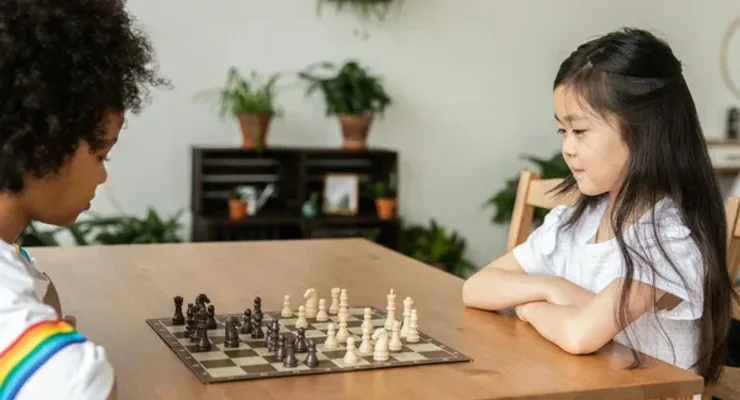 Photo: ThinkFun
Zingo is a version of Bingo designed for preschoolers and children learning to read. The game comes with a device that dispenses tiles with letters and words, and children must quickly recognize and match pictures with words on their card. Math games for children often skip the preschool age, but Zingo targets exactly that critical phase of reading skill development.
Versions are available for alphabet skills, math (Zingo 1-2-3), and English vocabulary. For children starting school, Zingo is excellent preparation because it develops visual letter recognition and quick associative connections. Logic games for preschool children are rarely as well designed and durable as this.
| Specification | Detail |
|---|---|
| Age | 4+ years |
| Players | 2-7 |
| Game length | 10-15 minutes |
| Price | ~20 EUR |
| Skills | Reading, visual recognition, quick reactions |
Pros: Ideal for preschool age (4-6 years); develops pre-reading skills that are the foundation for school; children love the tile-dispensing device; can be played by up to 7 children; math variant (Zingo 1-2-3) for early numeracy skills
Cons: Becomes too easy for children 7+; tile-dispensing device can break with rough handling; availability outside major markets may require ordering online
Our Opinion: Zingo is one of the most effective preschool games on the market. For parents who want to prepare their child for school through play rather than drills, Zingo is an excellent alternative to worksheets. Recommended for children ages 4-7.
5. Rush Hour Jr - Logic and Problem Solving from Age 5
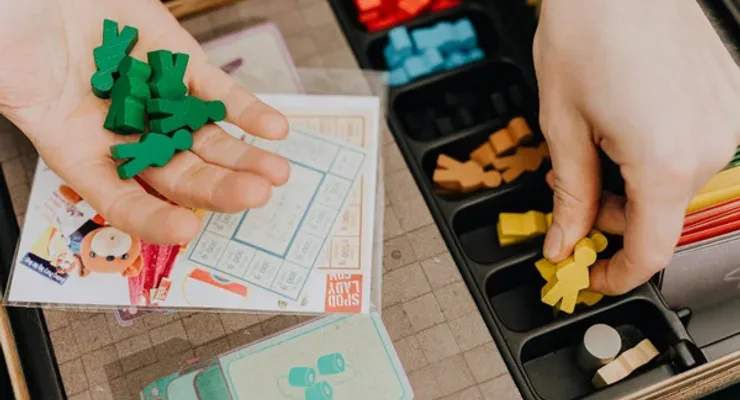 Photo: ThinkFun
Rush Hour Jr is the younger version of the classic Rush Hour logic puzzle, adapted for children from age 5. The goal is simple: move vehicles left-right or up-down until you clear a path for the red car to exit the traffic jam. Each of the 40 challenges (arranged from beginner to expert) has a unique solution that requires logical thinking.
Logic games for children are rarely this clean in their purpose: every challenge is a puzzle with one solution, giving children clear feedback. STEM games for the family are often group games, but Rush Hour Jr is a solo game that develops independent thinking and persistence. The ability to solve Rush Hour challenges correlates highly with advanced mathematical skills, according to ThinkFun research.
| Specification | Detail |
|---|---|
| Age | 5+ years |
| Players | 1 (solo) |
| Challenge length | 5-20 minutes |
| Price | ~25 EUR |
| Skills | Logic, problem solving, sequential thinking |
Pros: 40 challenges in 4 difficulty levels; develops logical and sequential thinking; durable plastic materials; compact - ideal to take traveling; solo game that develops independent thinking
Cons: Solo game - not for group entertainment; children may need help on harder challenges; 40 challenges can be exhausted in a few weeks
Our Opinion: Rush Hour Jr is the perfect gift for children ages 5-8 who show interest in puzzles. It develops logical thinking in a concrete, clear way without needing a parent to explain. One of our favorite solo challenges for children.
6. Code Master - Introduction to Programming Through a Puzzle
 Photo: ThinkFun
Code Master is an award-winning logic game that teaches children the basics of programming without a screen. The game simulates coding: the player must plan a sequence of actions (loops, conditions, sequences) to guide an avatar to the goal. With 60 challenges in 5 difficulty levels, Code Master is one of the most serious STEM games for families on the market.
Children who complete all Code Master challenges show significantly better understanding of sequential thinking and debugging - skills that are the foundation of programming. For parents who want to introduce children to STEM areas without tablets and screens, this is one of the rare games that truly fulfills its promise. Math games for children with programming elements are becoming increasingly popular in schools and parent circles.
| Specification | Detail |
|---|---|
| Age | 8+ years |
| Players | 1 (solo) |
| Challenge length | 10-30 minutes |
| Price | ~30 EUR |
| Skills | Algorithms, debugging, sequential thinking |
Pros: Teaches programming fundamentals without a screen; 60 challenges in 5 levels; award-winning by STEM teachers; direct preparation for learning real programming languages; high educational value STEM game for families
Cons: Complex for children under 8; solo game without group component; no digital continuation of the game to extend the experience
Our Opinion: Code Master is one of the rare games that actually teaches something concrete and applicable. For children with interests in technology and logic, this is an excellent investment. Computer science teachers actively recommend it as an introduction to computational thinking.
7. Qwirkle - Mathematical Patterns and Strategy
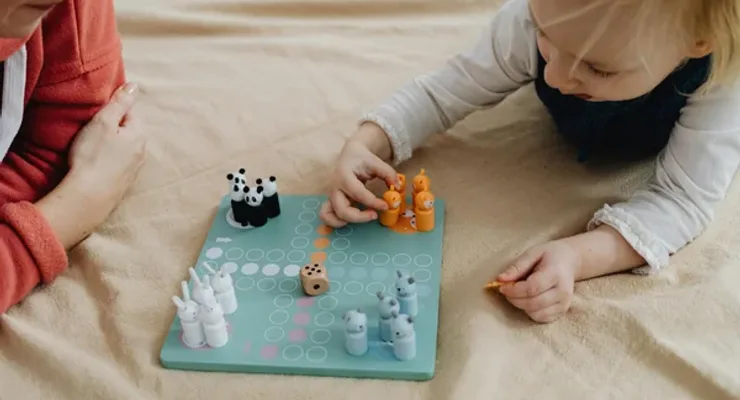 Photo: MindWare
Qwirkle is an award-winning family game in which players place tiles according to patterns of colors and shapes - without letters or numbers, making it accessible to children from age 6 who do not yet read fluently. The mechanic is simple: you place tiles in rows and columns where tiles must match either by color or by shape, but not both. Strategy develops with experience.
Math games for children are rarely this visually appealing and intuitive for young players. Qwirkle is the winner of the Spiel des Jahres award (the most prestigious award for board games), which speaks to the quality of its design. Logic games for children that can be played across the whole family without adults intentionally losing - Qwirkle achieves this because experience genuinely provides an advantage.
| Specification | Detail |
|---|---|
| Age | 6+ years |
| Players | 2-4 |
| Game length | 45-60 minutes |
| Price | ~30 EUR |
| Skills | Patterns, strategy, mathematical thinking |
Pros: Accessible without reading - just colors and shapes; Spiel des Jahres award guarantees design quality; mathematical patterns for children through visual patterns; high replayability without identical games; durable wooden tiles
Cons: Game lasts 45-60 minutes (longer with younger children); abstract mechanic may be less appealing to children who prefer thematic games; more expensive than Dobble or Zingo
Our Opinion: Qwirkle is a classic that deserves a place in every family collection. It develops mathematical patterns and strategy in an accessible way, and adults do not need to pretend to lose because experience genuinely provides an advantage. An excellent long-term family investment.
Conclusion
Educational board games for kids 2026 prove that learning and fun do not have to conflict. Each game in this review develops a specific set of skills: from Catan which teaches strategy and negotiation, to Code Master which introduces programming thinking. Educational board games for kids 2026 are available in all price ranges, from Dobble for 15 EUR to Ticket to Ride for 35 EUR.
| User profile | Recommendation | Price |
|---|---|---|
| Child 6-10 yrs - introduction to strategy games | Catan Junior | ~25 EUR |
| Family game for all ages for quick fun | Dobble | ~15 EUR |
| Child learning European geography through play | Ticket to Ride: First Journey | ~35 EUR |
| Preschooler developing reading skills | Zingo | ~20 EUR |
| Child 5-8 yrs for developing logical thinking | Rush Hour Jr | ~25 EUR |
| Child 8+ for introduction to programming thinking | Code Master | ~30 EUR |
| Whole family - mathematical patterns and strategy | Qwirkle | ~30 EUR |
For a first family purchase, we recommend Dobble (fast, all ages) and Qwirkle (strategy, longer challenge). For children who show interest in logic and problem solving, Rush Hour Jr and Code Master are excellent solo games. Educational board games for kids 2026 we recommend have high replayability - no game here will end up on the shelf after a week. For a broader perspective on children's education, also check out study organization apps 2026 as a complement to digital tools in education. Older children who want to build on learning through digital tools can also explore AI tools for students.
STEM games for the family bring multiple benefits: they strengthen family bonds, develop critical thinking, and teach children how to handle winning and losing. Educational board games for kids 2026 are not just holiday gifts - they are an investment in children's cognitive development. If you are looking for a gift that children will not put away after a week, educational board games for kids 2026 are the right choice.
Frequently Asked Questions
Which educational board games are good for children ages 5-6? For children ages 5-6 we recommend Dobble (visual perception), Zingo (pre-reading skills), and Rush Hour Jr (logic). All three have simple rules that children this age quickly learn. Catan Junior and Qwirkle are suitable from age 6 with an adult present for the first game.
How much is worth spending on an educational board game for a child? Games in the 20-35 EUR range offer the best value ratio. Cheap games under 15 EUR often have poorer materials and lose their appeal faster. More expensive games like the original Catan (50+ EUR) are justified for families who play regularly. Dobble for 15 EUR is an exception - exceptional value for the price.
Are STEM games for the family really better than digital games for children's development? Research consistently shows that physical board games develop social skills, patience, and non-verbal communication better than digital alternatives. STEM games for families like Rush Hour Jr and Code Master develop the same logical skills as educational apps, but add physical manipulation and absence of screens. Both categories have value.
How to choose the right game for a child of a specific age? Follow the recommended age on the box as a starting point, but also consider the child's individual development. A child who loves puzzles can play Rush Hour Jr at 5, while another may need to wait until 7. The age limit "6+" means most children that age understand the rules, but you can always try with a younger child using simplified rules.
Sources
- Spiel des Jahres awards - official list of winners - Spiel des Jahres, leading board game awards
- ThinkFun STEM games for children - Research - ThinkFun, research on the impact of logic games on children's cognitive development
- Board Game Geek - Catan Junior - BoardGameGeek, ratings and reviews from the gaming community