
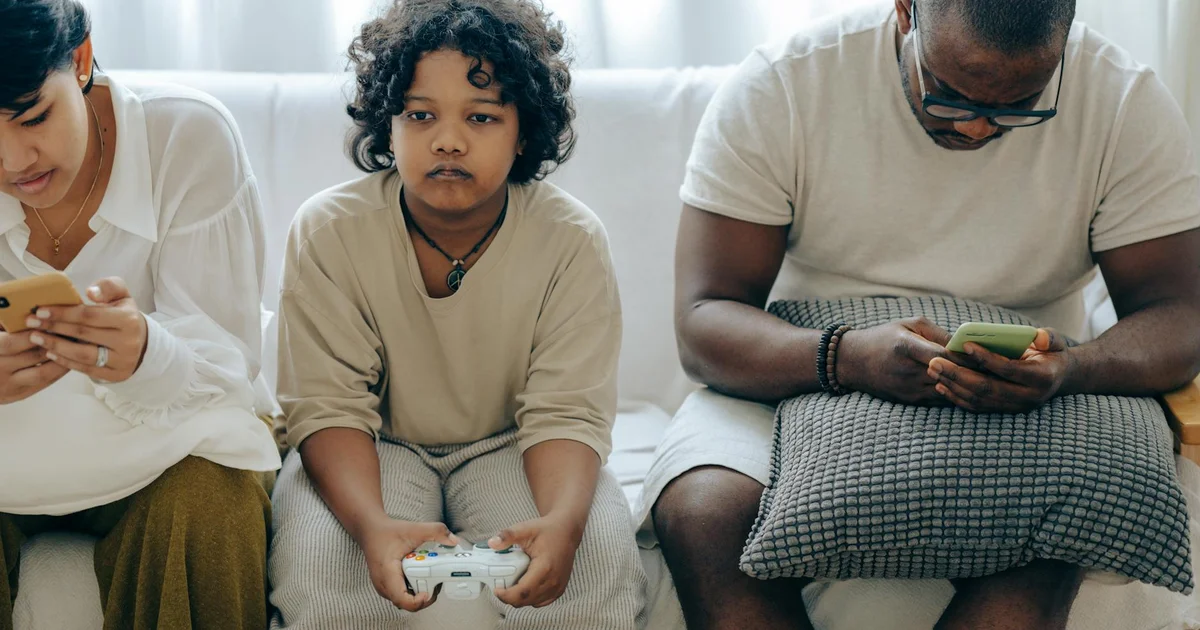

Your child almost certainly has a phone. And apps you've never opened. Some are harmless - but this article covers seven dangerous apps for kids that are documented to be connected to grooming, sextortion, and in the worst cases, teen suicides. Knowing which dangerous apps for kids to watch for is the first step every parent should take. This is not about paranoia - these are real numbers: arrests, lawsuits, police reports.
Quick overview: Top 7 dangerous apps for kids in 2026
| Rank | App | Main danger | Min. age | Parent recommendation |
|---|---|---|---|---|
| 1 | TikTok | Algorithm + sextortion | 13+ | Only with supervision, 16+ |
| 2 | Snapchat | Sextortion, disappearing messages | 13+ | Only with supervision, 16+ |
| 3 | Discord | Grooming, NSFW servers | 13+ | Only with Family Center |
| 4 | Kik | Anonymity, online predators | 13+ | Not recommended |
| 5 | Roblox | Grooming in games | 7+ | With strict parental controls |
| 6 | BeReal | Location sharing, harmful content | 13+ | Not for under 16 |
| 7 | Ask.fm | Cyberbullying, anonymous harassment | 13+ | Not recommended |
1. TikTok - The algorithm that leads to harmful content
 Photo: TikTok, ByteDance
TikTok has over two billion users worldwide and consistently appears on every list of dangerous apps for kids - and children start using it from early primary school. The problem isn't just the content kids actively search for. The algorithm pushes teenagers toward increasingly extreme videos. Research by Internet Matters found that children with eating disorders can end up in a "spiral" of anorexia-glorifying videos within just a few minutes of opening the app.
Sextortion is an even more serious concern. Predators use TikTok livestream comments to contact young girls and boys directly. The US Department of Justice filed a lawsuit against ByteDance in 2024 for collecting data from children under 13 without parental consent. TikTok has no real age verification - entering a false birth date is enough to bypass it.
| Age limit | 13+ (no real verification) |
| Platform | iOS, Android |
| Price | Free |
| Primary risk | Algorithm, sextortion, children's data collection |
| Parental controls | Family Pairing (limited) |
| Age verification | Self-reported only |
Pros: Creative videos, educational content, popular among peers
Cons: Algorithm exposes harmful content, no real age verification, sextortion schemes, DOJ lawsuit for collecting data from under-13s without parental consent
Our opinion: TikTok doesn't need to be banned outright, but parents must actively set up Family Pairing and talk with their child about what appears on the For You Page. Pay close attention if your child spends more than an hour a day without supervision - the algorithm becomes a problem fast. For children under 13, there is no justification for using the app.
2. Snapchat - Disappearing messages as false security
 Photo: Snapchat, Snap Inc.
Snapchat remains among the most dangerous apps for kids - especially because of its disappearing messages feature. Teenagers believe they are safe because messages "disappear" - but screenshots are always possible, and predators know this. According to Snap Research, a full 77% of all sextortion cases in the US occur on Snapchat or Instagram, and the platform receives over 10,000 sextortion reports every single month.
The Quick Add feature automatically suggests unknown users to follow - giving predators a direct path to your children. Cyberbullying is also well-documented: disappearing messages reduce bully accountability, and only 23% of abused teenagers report an incident at all. Common Sense Media describes Snapchat as "a recipe for bullying, trolling, and hurt feelings."
| Age limit | 13+ (no real verification) |
| Platform | iOS, Android |
| Price | Free (Snapchat+ premium) |
| Primary risk | Sextortion, disappearing messages, Quick Add |
| Parental controls | Limited, no Family Center |
| Age verification | Self-reported only |
Pros: Popular among peers, fun filters and effects, Stories format
Cons: 77% of sextortion cases occur here, Quick Add opens contact with strangers, disappearing messages give false sense of security, screenshots always possible, cyberbullying with no accountability
Our opinion: If your teenager uses Snapchat, immediately disable Quick Add in privacy settings and have a specific conversation about the dangers of sextortion. Explain clearly that no photograph ever truly "disappears" from the internet. For children under 14, we recommend avoiding the platform entirely.
3. Discord - Gaming chat that hides online predators
 Photo: Discord, Discord Inc.
Discord was originally designed for gaming communities, but it now has over 150 million users - including many minors who, per the terms of service, should not be there. Since 2018, over 30 arrests have been recorded for child abuse facilitated via Discord, and in 2025 alone police prosecuted 6 new cases. The organization End Sexual Exploitation documented access to NSFW servers with explicit adult content available to minors without any verification.
Age verification comes down to entering a birth date - easy to bypass. The state of New Jersey launched a lawsuit against Discord in 2025 for "deceptive safety practices" that leave children exposed to grooming. Voice channels don't reveal location, but private messages between adults and children are practically unmonitored.
| Age limit | 13+ (self-reported date only) |
| Platform | iOS, Android, Desktop |
| Price | Free (Discord Nitro premium) |
| Primary risk | Grooming, NSFW servers, unmonitored communication |
| Parental controls | Family Center (limited) |
| Age verification | Self-reported only |
Pros: Gaming community, voice channels, organizing teams and clubs
Cons: 30+ arrests for child abuse, NSFW servers accessible to minors, New Jersey lawsuit 2025, no real age verification, grooming documented in private messages
Our opinion: Discord can be fine for older teenagers who use it exclusively with friends they know in real life. But if your child enters public servers with strangers - especially gaming servers - the grooming risk is real. Enable Family Center and regularly check which servers your child follows.
4. Kik Messenger - A top favorite tool of online predators
 Photo: Kik, MediaLab AI
Kik Messenger should worry every parent for one straightforward reason: registration requires no phone number - just an email address. That means complete anonymity for anyone who wants to contact your child without any identity check. The FBI has issued multiple warnings about Kik as one of the platforms predators use most frequently to access children, according to data cited by NSPCC.
Kik's public groups are virtually unmoderated - child pornography is a documented problem that lands Kik on every serious dangerous apps for kids list, and predators actively seek out young users through public group conversations. Unlike Snapchat or TikTok, Kik has no parental controls, no Family Center, no tool of any kind to protect underage users. The platform closed in 2019 only to reopen in 2021 - with the same security problems.
| Age limit | 13+ (email, no verification) |
| Platform | iOS, Android |
| Price | Free |
| Primary risk | Complete anonymity, online predators, child pornography |
| Parental controls | None |
| Age verification | None (email only) |
Pros: Anonymous communication for adult users
Cons: No identity verification, FBI warnings, predators actively target children, public groups without moderation, child pornography documented, no parental controls
Our opinion: We don't recommend Kik for children or teenagers at any age. If you find this app on your child's phone, remove it immediately and have an open conversation about why it was installed. Anonymity here is a structural problem - no settings adjustment can fix it.
5. Roblox - The children's game that isn't always safe
 Photo: Roblox, Roblox Corporation
Roblox gets left off many dangerous apps for kids lists because it's marketed as a harmless platform for creative games - and for many families, it is. But the statistics tell a different story: since 2018, over 30 arrests have been recorded for grooming and sexual abuse of children via Roblox, and in 2025 alone 6 new cases were prosecuted according to Australia's eSafety Commissioner. More than 1,000 US families have sued Roblox Corporation for failing to protect children, with allegations that exploitation networks like 764 and CVLT actively used the platform to access victims.
Age verification for chat was only introduced in January 2026 - for years before that, chat was practically unchecked, giving predators free access to children. NSPCC specifically warns about so-called "social hangout" games where children and adults communicate freely without any oversight.
| Age limit | 7+ (ESRB, depends on game) |
| Platform | iOS, Android, Desktop, Console |
| Price | Free (in-app Robux purchases) |
| Primary risk | Grooming in games and messages, exploitation networks |
| Parental controls | Available (Account Restrictions) |
| Age verification | Chat age verification from January 2026 |
Pros: Creative games, coding skill development, socializing with peers, parental controls available
Cons: 30+ grooming arrests, 1000+ families in litigation, exploitation networks documented, social hangout games unmonitored, chat age verification only recently introduced
Our opinion: Roblox can be enjoyable for children with the right oversight. Disable private messages from unknown users, enable Account Restrictions, and occasionally sit with your child while they play - especially in social games. Children under 10 should not play without a parent present.
6. BeReal - One of the newer dangerous apps for kids with location and harmful content
 Photo: BeReal, BeReal SAS
BeReal markets itself as the "authentic" alternative to Instagram - no filters, no production, just real moments. But behind that message are serious safety failures. Research cited by Safety Detectives found that a full 59% of users are exposed to sexual content - a higher rate than most other platforms. Location sharing when posting is enabled by default: every photo published to the public feed reveals exactly where your child is at that moment.
The platform has no parental controls - unlike TikTok or Roblox, parents have no tool to manage their child's account. Content moderation is reactive and slow, with harmful content removal taking days. The paradox is that "authenticity" as a brand makes this platform more dangerous than the average social network - kids relax and forget they're still online with strangers.
| Age limit | 13+ (App Store: 12+) |
| Platform | iOS, Android |
| Price | Free |
| Primary risk | Location sharing, 59% exposure to sexual content |
| Parental controls | None |
| Age verification | Self-reported only |
Pros: Authentic content without filters, simple interface
Cons: 59% exposure to sexual content, location sharing on by default, no parental controls, moderation takes days, false sense of security
Our opinion: BeReal is not for children or younger teenagers. If an older teen insists on using it, immediately disable location sharing and set the account to friends-only. Tell them specifically that 6 in 10 users encounter sexual content - that statistic speaks for itself.
7. Ask.fm - Anonymous harassment with tragic consequences
 Photo: Ask.fm, Ask.fm Inc.
Ask.fm is an anonymous Q&A platform directly linked to multiple documented teen suicides across Europe and the US - and consistently ranks as one of the most dangerous apps for kids on every list published by child protection organizations over the past decade. Anonymity is its core feature - and that is the source of all its problems. Bullies can send messages encouraging self-harm, insults, and threats without any consequence because identifying them is impossible. According to SaferKid's analysis, cyberbullying on Ask.fm frequently goes on for years without parents knowing.
The platform has no parental controls and no moderation tools to stop abuse in real time. Extortion cases are also documented: predators use the anonymity to make demands under threat of releasing compromising material. If you find Ask.fm on your child's device, a conversation about what is happening on that platform is an urgent priority.
| Age limit | 13+ (unverified) |
| Platform | iOS, Android, Web |
| Price | Free |
| Primary risk | Anonymous cyberbullying, teen suicides |
| Parental controls | None |
| Age verification | None |
Pros: Ability to ask questions to acquaintances
Cons: Anonymity removes bully accountability, multiple teen suicides directly documented, no parental controls, extortion cases documented, harassment can go undetected for years
Our opinion: We don't recommend Ask.fm for children or teenagers, full stop. The platform is designed in a way that structurally enables abuse - anonymity without accountability is a recipe for tragedy. If your child uses Ask.fm, deactivate the account immediately and consider speaking with a school counselor or psychologist if there are signs of prolonged harassment.
Conclusion: Review of 7 dangerous apps for kids and concrete recommendations
None of these apps are an automatic no-go zone - but all of them require parents to know what happens on them. Kik and Ask.fm have no argument in favor of use by minors whatsoever. Discord and Roblox can work with the right supervision. TikTok, Snapchat, and BeReal are more complex: millions of children use them without any problem, while at the same time they are platforms for thousands of documented attacks.
Parents who ban all apps without explanation don't usually solve the problem - kids install apps on school devices or at friends' houses. A better approach is talking about why a specific app carries a specific risk, setting controls together with your child, and sending a clear message: "If something uncomfortable happens to you online, you can tell me without fear of being punished."
| App | Recommendation under 13 | Recommendation 13-16 | Recommendation 16+ |
|---|---|---|---|
| TikTok | No | Only with Family Pairing | With supervision |
| Snapchat | No | Only without Quick Add | With risk conversation |
| Discord | No | Known servers only | OK with Family Center |
| Kik | No | No | Not recommended |
| Roblox | Only with parent present | With Account Restrictions | More freely |
| BeReal | No | Not recommended | With location off |
| Ask.fm | No | No | Not recommended |
For active protection, we recommend using parental tools like iOS Screen Time or Google Family Link for kids' smartwatches that track screen time. An educational approach to digital literacy, like what we describe in our AI assistants for parents guide, can be a valuable partner in this process.
Frequently asked questions
Which apps are the most dangerous for kids in 2026?
According to research from Common Sense Media and NSPCC, the most dangerous apps for kids are those that combine anonymity with the ability to contact strangers. Ask.fm, Kik, and Discord lead in cyberbullying and grooming risk, while TikTok and Snapchat record the highest number of sextortion cases. Anonymity without accountability remains the common denominator across all platforms that appear repeatedly in police reports.
How can I tell which apps my child has on their phone?
Regularly review installed apps together with your child. On iPhone, go to Settings > Screen Time > Content & Privacy Restrictions. On Android, use Google Family Link to view and manage apps in real time. Pay special attention to apps that look like calculators or alarm clocks - they can be hidden vaults for content and communication your child wants to hide.
How to protect your child from dangerous apps for kids in 2026?
Set parental controls at the operating system level - iOS Screen Time or Android Family Link - and at the app level wherever possible. Talk openly about online safety without punishment. Explain what grooming and sextortion are in an age-appropriate way, watch for signs of behavioral change like withdrawal or anxiety, and regularly review the friends list and contacts on social media.
At what age can children use social media?
Most platforms require a minimum of 13 years, but child psychology experts recommend 16+ for most social networks. The American Academy of Pediatrics recommends active parental oversight until adulthood. Emotional maturity matters more than chronological age - some 14-year-olds are more ready than some 16-year-olds.
What is sextortion and how do I talk to my child about it?
Sextortion is blackmail using explicit photos or videos: the abuser threatens to publish material unless the victim pays money or sends more content. Tell children clearly to never send intimate photos or videos - not even to someone they trust, because material can end up in the wrong hands. If it happens, it is not the child's fault and they should tell parents immediately. Reports go to the police and the European portal for reporting child sexual abuse material.
How we tested and chose
This guide on dangerous apps for kids is based on data from organizations specializing in child online protection: Common Sense Media, NSPCC (National Society for Prevention of Cruelty to Children), Internet Matters, Safety Detectives, and Australia's eSafety Commissioner. Each app was evaluated on the number of documented incidents (arrests, lawsuits, police reports), availability of parental controls, and how easy it is for minors to bypass age limits. App selection was also informed by usage prevalence in Croatian schools - the list draws on conversations with educators from several Zagreb and Split primary and secondary schools.
Sources and references
- Common Sense Media - Apps to Watch Out For - Review of dangerous apps for children
- Internet Matters - TikTok Parent Guide - TikTok safety guide for parents
- NSPCC - Roblox Online Safety - Research on Roblox safety
- End Sexual Exploitation - Dangers of Discord for Children - Discord incident documentation
- Safety Detectives - Is BeReal Safe for Kids? - BeReal safety risk analysis
- Snap Research - Sextortion Gen Z Study - Snapchat sextortion data
- eSafety Commissioner Australia - Roblox Warnings - Government grooming report
- SaferKid - Ask.fm Parent Review - Ask.fm risk analysis
Related articles
If you're interested in the broader topic of children's digital safety and smart technology use, we recommend:
- Top 7 Smartwatches for Kids in 2026 - Watches with GPS tracking and parental controls
- Top 7 AI Assistants for Parents in 2026 - Tools that help parents with digital parenting
- Top 7 Educational Board Games for Kids in 2026 - Fun screen-free alternatives
- Top 7 STEM Toys for Kids in 2026 - Creative toys for developing digital skills