


First grade enrolment in Croatia in 2027 covers children born between 1 April 2020 and 31 March 2021, because the law says children start school if they turn six by 1 April. Parents register the child online through e-Upisi, followed by a medical exam and an interview at the school, which under the rulebook take place between 31 March and 15 June. The exact application dates for 2027 have not been published yet, but based on previous years they are expected from mid-February to 15 March.
This guide is for parents of future first-graders. The rules on age, assessment and deferral are set by law and do not change from year to year, so we present them as firm. We mark the 2027 dates as expected until the ministry and schools publish them.
First Grade Enrolment 2027 - Quick Overview
| # | What | Rule or deadline | Source |
|---|---|---|---|
| 1 | Who enrols | born 1.4.2020 to 31.3.2021 | Act, Art. 19 |
| 2 | Application | e-Upisi, expected mid-February to 15.3.2027 | e-Upisi 2026 |
| 3 | Medical exam | school doctor, before the school interview | Rulebook |
| 4 | Assessment | 31 March to 15 June | Rulebook, Art. 5 |
| 5 | Documents | not required in the app for regular enrolment | e-Upisi guide |
| 6 | Deferral | only once, for one year, decided by the authority | Rulebook, Art. 9 |
| 7 | School | by catchment area, exceptions by law | Act, Art. 16 to 18 |
1. Who Starts First Grade in 2027
 Photo: Sunvani Hoàng, Pexels
Under Article 19 of the Primary and Secondary School Education Act, children who turn six by 1 April of the current year enrol in first grade. For the 2027/2028 school year, that means children born between 1 April 2020 and 31 March 2021. The same pattern applied this year, when schools officially listed the range 1.4.2019 to 31.3.2020.
For first grade enrolment, children whose enrolment was deferred last year, and children of school age who were not enrolled for other reasons, also enrol. Primary school is compulsory and lasts eight years, usually from age six to fifteen. The list of school-age children is drawn up by 1 March by the county administration, or the City Office in Zagreb, so parents do not need to report that the child exists, only submit the enrolment application.
| Child born | Status for 2027/2028 |
|---|---|
| 1.4.2020 to 31.3.2021 | regular first grade enrolment |
| before 1.4.2020, deferred in 2026 | enrols this year |
| 1.4.2021 to 31.12.2021 | can apply for early enrolment |
| from 1.1.2022 | not yet of school age |
Pros: the age rule is clear and the same every year, so parents can plan ahead
Cons: children born in February and March start school at about six and a half and are the youngest of the regularly enrolled
Our opinion: If your child was born in early 2021, they will be among the youngest in their year. That is no reason to panic, but it is a good reason to say openly at the school interview what worries you.
2. Applying Through e-Upisi and Deadlines
 Photo: Vitaly Gariev, Pexels
Since 2024, first grade enrolment has gone through the National Information System for Primary School Enrolment at osnovne.e-upisi.hr. Parents log in through e-Građani, and those without credentials can apply through the school. In 2026, regular applications ran from 16 February to 15 March, applications for children with developmental difficulties from 2 February to 15 April, and early enrolment and temporary exemption from 16 February to 31 March, according to the City of Zagreb.
The first grade enrolment dates for 2027 have not been published. If the 2025 and 2026 pattern repeats, regular applications are expected from mid-February to 15 March 2027. Some deadlines are fixed by the rulebook on assessing a child's psychophysical condition: the early enrolment request by 31 March, the assessment between 31 March and 15 June, and if the child cannot attend the scheduled appointment, the school must be told by 30 May.
| Step | 2026 (official) | 2027 |
|---|---|---|
| List of school-age children | by 1 March | by 1 March (rulebook) |
| Applications, children with difficulties | 2.2 to 15.4 | expected early February to 15.4 |
| Regular applications | 16.2 to 15.3 | expected mid-February to 15.3 |
| Early enrolment, exemption | 16.2 to 31.3 | by 31 March (rulebook) |
| Assessment | 1.4 to 15.6 | 31.3 to 15.6 (rulebook) |
Pros: you apply online, without going to the school
Cons: you need an e-Građani credential of substantial level or higher, and the exact 2027 dates are not yet known
Our opinion: Check now that your e-Građani login works, for example through mobile banking. The last day of applications is not the moment to discover your password has expired.
3. Medical Exam and Vaccination
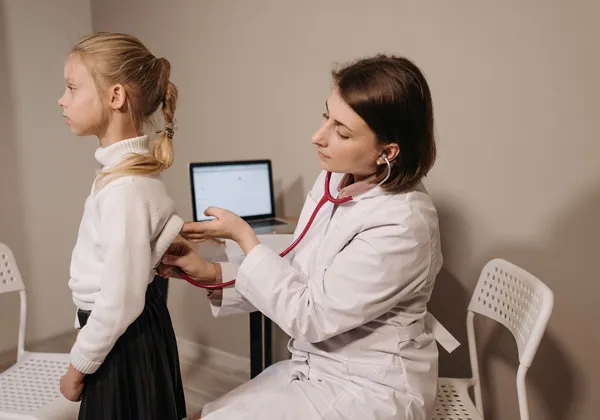 Photo: Pavel Danilyuk, Pexels
The first part of first grade enrolment is a systematic exam with the school doctor, usually at a health facility and exceptionally at the school. The doctor opens a health record that follows the child through school, talks with the parent about pregnancy, birth and development, measures height and weight, checks vision and hearing, and assesses speech, motor skills and emotional maturity. The aim is to assess the child's readiness for school, explains the Osijek-Baranja County Public Health Institute. Some counties also run lab tests, for example screening for anaemia and cholesterol.
Booster vaccinations come with the exam. Under the draft 2026 compulsory vaccination programme, children receive DTaP-IPV at age five and MMR against measles, mumps and rubella at school entry. Children who missed the age-five booster get a polio dose in first grade. Vaccination is not a condition for primary school enrolment, unlike public kindergartens. In Zagreb and, for example, Poreč, parents booked school doctor appointments themselves through Terminko in 2026; elsewhere the school or public health institute sets the appointment.
| Part of the exam | What happens |
|---|---|
| Health record | opened and kept through school |
| Talk with the parent | pregnancy, birth, development, illnesses |
| Measurements | height, weight, vision, colour vision, hearing |
| Development check | speech, motor skills, social and emotional maturity |
| Lab tests | in some counties (anaemia, cholesterol, urine) |
| Vaccination | MMR at enrolment, per the vaccination programme |
Pros: the child gets a thorough check, and problems with vision or speech are found before school starts
Cons: appointments differ by town, and in some places there are several separate visits (lab, exam, school)
Our opinion: Bring every report you already have to the exam, from the speech therapist to the eye doctor. The doctor can reach an opinion faster, and you avoid an extra visit.
4. Assessment: What Is Actually Checked
 Photo: Yan Krukau, Pexels
What parents call "testing" is officially the assessment of the child's psychophysical condition, and it is compulsory before regular enrolment. It is not a knowledge exam. The child does not need to read or write; the aim is to judge whether they are ready to start school. The assessment is done by the school's expert committee for the catchment area: the school doctor, a pedagogue or psychologist, often a speech therapist or special education teacher, a class teacher and a Croatian language teacher.
The committee looks at speech, fine motor skills, attention and social and emotional maturity, and the tasks themselves differ from school to school. Based on the exam, the talk with the parent and kindergarten records, the committee gives its opinion. The parent has the right to see each member's opinion, and the school informs them of the result by email or in writing. Deferral, early enrolment or an adapted programme is decided by the county administration or the City Office, and the decision can be appealed to the ministry.
| Committee member | Typical focus (varies by school) |
|---|---|
| School doctor | health, vision, hearing, development |
| Pedagogue or psychologist | attention, reasoning, emotional maturity |
| Speech therapist or special education teacher | speech, language, fine motor skills |
| Class teacher | how the child handles tasks, cooperation |
| Croatian language teacher | pronunciation, understanding, vocabulary |
Pros: the assessment looks at the whole child, not just knowledge, and the parent takes part in the conversation
Cons: it is short, so a bad day can affect the committee's impression
Our opinion: Do not drill your child for a "test". It is enough that they know their first and last name, are not afraid to talk to an unfamiliar adult, and have had a good night's sleep.
5. Documents for First Grade Enrolment
 Photo: RDNE Stock project, Pexels
For regular first grade enrolment you do not need to upload documents in e-Upisi, apart from filling in the initial questionnaire, according to the parents' user guide. Documents are required only for children with developmental difficulties, for early enrolment (the kindergarten team's opinion, if the child attended kindergarten) and for temporary exemption (medical records and the finding of the single expert assessment body). If the other parent has no OIB, proof of legal representation is needed.
For the medical exam, school medicine services usually ask for more. A typical list includes the health insurance card, vaccination card, a paediatrician's certificate on the child's health in the preschool years, a dental passport and any specialist reports. The dental passport and lab tests are local practice, not legal requirements, so check the list with your school.
| For what | Documents |
|---|---|
| e-Upisi application | e-Građani login, initial questionnaire (the system shows the child's data automatically) |
| Medical exam | health insurance card, vaccination card, paediatrician's certificate |
| Often requested | dental passport, specialist reports |
| Early enrolment | kindergarten team's opinion (if the child attended) |
| Child with difficulties | medical, psychological and rehabilitation records |
| Temporary exemption | medical records, expert assessment finding |
Pros: for most children, the application involves no paperwork
Cons: the list for the medical exam differs between counties, so you have to check it with the school
Our opinion: Book the dental passport appointment with your dentist in January. In February and March appointments can get tight because the whole year group needs one at the same time.
6. Deferral, Early Enrolment and Exemption
 Photo: Yan Krukau, Pexels
In first grade enrolment, deferral is not something the parent chooses. It is proposed by the school's expert committee and decided by the county administration or City Office, only once and for one school year. There is no separate deferral request in e-Upisi: the child is registered for regular enrolment, and the committee assesses at the interview whether they need another year. A child with a deferral must attend preschool that year. According to HRT, minister Radovan Fuchs estimated that 8.3 to 8.4 percent of first-graders were deferred in 2026.
Early enrolment can be requested by parents of a child who turns six by the end of the year; for 2027, that means children born between 1 April and 31 December 2021. The request must be submitted by 31 March with the kindergarten's opinion if the child attended kindergarten or preschool, and the child must take a psychological assessment. Temporary exemption from enrolment is possible for a child with seriously impaired health or multiple difficulties, with medical records and a finding from the single expert assessment body.
| Option | Who decides | Condition |
|---|---|---|
| Deferral | county or City Office, on the school's proposal | only once, a year of preschool |
| Early enrolment | county or City Office | request by 31.3, psychological assessment |
| Temporary exemption | county or City Office | medical records, expert assessment |
| Appeal | Ministry of Science, Education and Youth | through the county administration or City Office |
Pros: children who need more time get a year of preschool, and mature children can start earlier
Cons: the parent cannot decide on deferral alone, and deferral cannot be repeated
Our opinion: If you think your child is not ready, say so openly at the interview and bring the kindergarten's opinion. The committee bases its decision on documents, so your impression without paperwork carries less weight.
7. Which School and What Changes in 2027
 Photo: Yan Krukau, Pexels
In first grade enrolment, the child goes to the school for their catchment area, based on permanent or registered temporary residence. Enrolment in another school is possible if it does not create a new class section, and without that condition for alternative, international, minority, private and religious schools. In e-Upisi, parents can state a preference for another school, and the county administration, or the City Office in Zagreb, decides. Even then, the medical exam and assessment are usually done at the catchment-area school.
For 2027, no new act or rulebook on first grade enrolment has been passed, so the 2026 rules apply. The experimental full-day school programme runs until the end of the 2026/2027 school year, and in February 2026 the government announced that full-day teaching will not start in 2027. In 2025/2026, 35,919 first-graders started school, and for 2026/2027 the minister gives a preliminary figure of more than 36,500.
| Item | Status (8 Oct 2026) |
|---|---|
| Act and rulebook on enrolment | no changes in 2026 |
| e-Upisi dates 2027 | not published |
| Full-day school | not starting in 2027, model under review |
| First-graders 2025/2026 | 35,919 (Croatian Bureau of Statistics) |
| First-graders 2026/2027 | more than 36,500 (preliminary) |
Pros: the rules are the same as last year, so older siblings' and neighbours' experience still applies
Cons: counties publish the enrolment plan and catchment areas only early in the year, so the choice of school cannot be settled in advance
Our opinion: If you want a different school, ask in January how many class sections it plans. If your child would mean opening a new section, a request for another public school is unlikely to succeed.
Conclusion: A Calendar for Parents of First-Graders
| When | What to do |
|---|---|
| January 2027 | check e-Građani, book the dental passport, gather reports |
| February to 15 March 2027 (expected) | register the child in e-Upisi |
| By 31 March 2027 | request early enrolment, if you want it |
| March to June 2027 | medical exam and school interview |
| By 30 May 2027 | tell the school if the child cannot attend the appointment |
| Summer 2027 | get the backpack and study corner ready |
First grade enrolment in 2027 will follow the same rules as in 2026: an e-Upisi application, an exam with the school doctor and an interview with the committee by 15 June. What you can sort out in January is e-Građani and the papers for the doctor, so do not leave that for February. Once enrolment is done, our guides to school backpacks and kids' desks will help, and lower-income families can check their right to child benefit.
Frequently Asked Questions
Which children start first grade in 2027?
Children born between 1 April 2020 and 31 March 2021 start first grade in 2027/2028, because the law says children who turn six by 1 April enrol. Children whose enrolment was deferred last year also enrol.
When does first grade enrolment start in 2027?
The 2027 dates have not been published. In 2026, regular e-Upisi applications ran from 16 February to 15 March, and something similar is expected in 2027. Under the rulebook, the assessment takes place between 31 March and 15 June.
What does a child need to know to start first grade?
The child does not need to read or write. The committee assesses maturity: speech, attention, motor skills and how they handle simple tasks. It helps if they know their name and surname and colours, and are not afraid to talk to adults.
Is vaccination a condition for starting school?
No. The law does not make vaccination a condition for primary school enrolment, unlike public kindergartens. Booster vaccinations are still usually given at or shortly after the systematic exam, under the compulsory vaccination programme.
Can a parent defer enrolment on their own?
No. Deferral is proposed by the school's expert committee and decided by the county administration or City Office. It is granted only once, for one year, and the child must then attend preschool.
How We Researched
We took the rules from the Primary and Secondary School Education Act and the rulebook on assessing a child's psychophysical condition (Official Gazette 67/14, 63/20), and the e-Upisi process from the parents' guide, school notices and City of Zagreb pages for 2026. Statistics come from the Croatian Bureau of Statistics and HRT. We derived the 2027 dates from legal deadlines and previous years and marked them clearly as expected. Information is as of 8 October 2026, and we will update the article when official dates are published.
Sources and References
- Primary and Secondary School Education Act
- Rulebook on assessing a child's psychophysical condition
- City of Zagreb - primary school enrolment
- Parents' guide - National Information System for Primary School Enrolment
- gov.hr - first grade enrolment
- Osijek-Baranja County Public Health Institute - exam before enrolment
- Croatian government - full-day teaching not starting in 2027
- HRT - more than 36,500 first-graders, fewer deferrals
Related articles:
- Best School Backpacks 2026
- Best Kids Desk Chairs 2026
- Best Kids Desks 2026
- Best Colored Pencils 2026
- Child Benefit in Croatia 2027: Eligibility, Amounts and How to Apply
Cover photo: RDNE Stock project, Pexels